
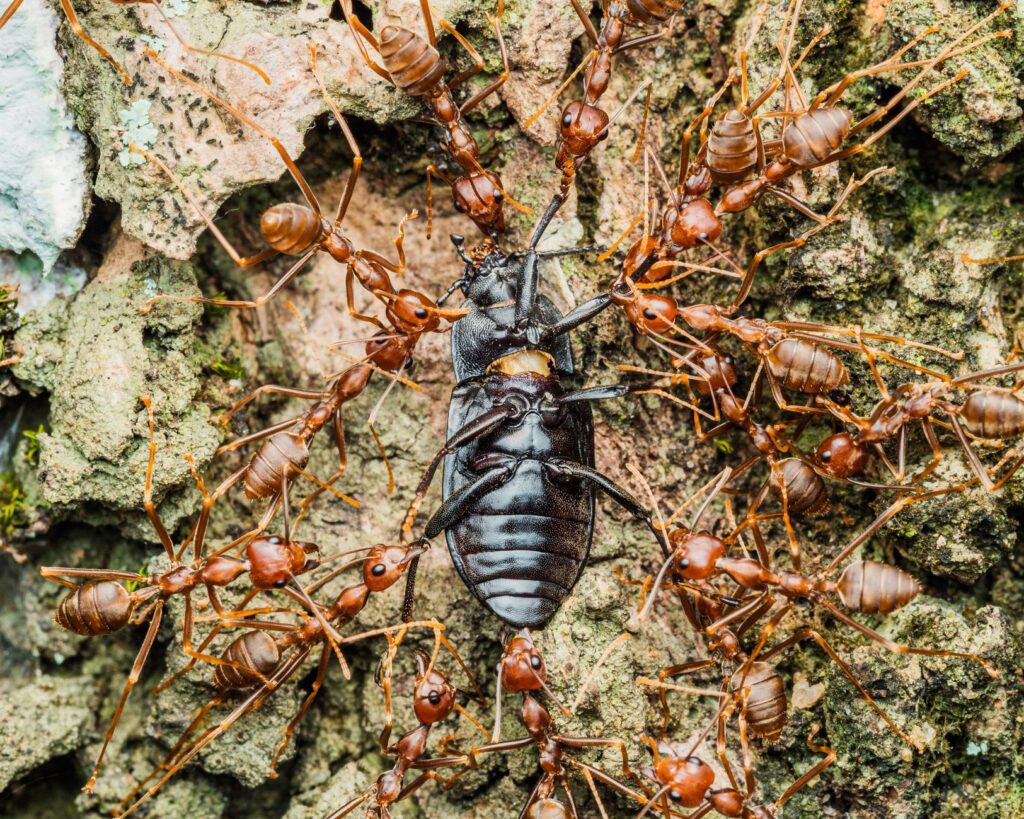
Carpenter ants vs termites can cause costly problems when early signs are missed. Learn the signs, risks, and when to call Brandley Pest Control.
Key Takeaways About Carpenter Ants Vs Termites
- Carpenter ants and termites both damage wood, but you can tell them apart by looking at differences in their antennae, waist shape, and wings.
- Carpenter ants excavate wood to build nests, while termites consume wood as a food source. Both can cause structural concerns if left unchecked.
- Correct identification matters because carpenter ants and termites require different treatment approaches, and professional pest control may be needed for either one.
- Knowing where to look for signs of activity, such as damaged wood or debris near wooden structures, can help you catch a problem early.
How to Identify Carpenter Ants Vs Termites
The most important distinction between carpenter ants and termites is what they do with wood. Termites consume wood as a food source. Carpenter ants do not consume wood at all. Instead, they excavate it to build their nests. According to UC IPM, carpenter ant nests in large colonies can consist of an extensive network of galleries and tunnels, often beginning in an area where there is damage from water or wood decay. Understanding this core difference helps you read the signs correctly when you notice wood damage around your home.
How to Tell Carpenter Ants Vs Termite Types Apart
Because carpenter ants hollow out wood rather than eat it, the damage they leave behind looks different from termite damage. Carpenter ant galleries and tunnels are clean, do not contain debris, and have a smooth, well-sanded appearance. Termite-damaged wood, by contrast, typically shows signs of consumption rather than clean excavation.
While usually not as serious as termites, carpenter ants can still weaken building structures over time. Knowing which pest you are dealing with matters because the treatment approach for each is different.
How to Spot Carpenter Ants Vs Termite Activity Inside Your Home
One tell-tale sign of carpenter ant activity is sawdust piles near wooden structures. As Oregon State University Solve Pest Problems notes, carpenter ants damage wood as they build their nests, and those sawdust accumulations are a reliable indicator. Termites, because they consume wood, do not leave behind the same type of clean sawdust deposits.
Indoors, carpenter ants may build nests within intact or dry wood, water-damaged wood, insulation, crawl spaces, and attic spaces. If you find smooth, clean tunnels inside wood paired with nearby sawdust, carpenter ants are the more likely cause.
Where Carpenter Ants Vs Termite Activity Shows Up Around Homes
Carpenter ants build nests in a wide range of locations both inside and outside your home. Outdoors, they commonly nest in tree stumps, firewood, fence posts, and wooden retaining walls. Indoors, they gravitate toward areas with water-damaged wood or wood decay, where they begin excavating galleries for their nests.
Subterranean termites, on the other hand, travel through soil to reach wood in a structure. Recognizing where each pest tends to show up can help narrow down what you are dealing with.
Exterior Entry Points carpenter ants vs Use
Outdoor wood sources like tree stumps, firewood piles, fence posts, and retaining walls near your home can serve as starting points for carpenter ant activity that eventually moves indoors. Keeping stored firewood and decaying wood away from your foundation reduces the opportunity for carpenter ants to establish nests closer to the structure.
Subterranean termites approach from below, moving through soil to access a home’s foundation. Inspecting both wood contact points and soil-to-structure transitions gives you the broadest picture of potential risk.
Why Carpenter Ants Vs Termites Problems Develop
Carpenter ants and termites both target wood in and around your home, but they arrive for different reasons and follow different patterns. Understanding what draws each pest helps you recognize the warning signs before damage builds up inside walls or framing.
Outdoor Nesting Areas for carpenter ants vs
Subterranean termites live in the soil and forage outward into structures to reach wood. According to the University of Georgia termite guide, they can excavate galleries inside wood, sometimes leaving only a thin wooden exterior behind. Black carpenter ants, by contrast, are nocturnal and range from 1/4 to 5/8 inch in size. They nest in wood rather than consuming it for nutrition.
Drywood termites take a different approach entirely. They require no soil contact or liquid moisture, getting all the moisture they need from the wood itself and metabolic processes. This means drywood termites can establish themselves in above-ground wood with no connection to the ground.
Food and Shelter That Attract carpenter ants vs
Termites feed directly on wood, which is both their food source and their shelter. A mature termite colony can range from several hundred to several million individuals, and that colony size drives ongoing demand for new wood to consume. Carpenter ants hollow out wood for nesting space but forage elsewhere for food. The distinction matters because each pest leaves different evidence behind.
How carpenter ants vs Move Around Homes
Native subterranean termite species begin swarming in January and are mostly finished by early June, according to the University of Georgia termite guide. They swarm in the morning or early afternoon and are not attracted to lights. Formosan subterranean termite swarmers are larger, about 1/2 inch with wings included, and have a caramel-colored body. Because carpenter ants are nocturnal, homeowners may notice them at night rather than during daytime hours.
Trails and Entry Points carpenter ants vs Use
Subterranean termites enter structures from below, maintaining a connection between the soil colony and the wood they consume. Drywood termites skip the soil entirely, accessing wood directly. Carpenter ants can enter at various points and are easier to spot because of their larger size.
Knowing whether you are dealing with a soil-based termite colony, a drywood infestation in above-ground wood, or carpenter ants nesting in your structure helps determine the right approach to address the problem.
Risks From Carpenter Ants Vs Termites
Both carpenter ants and termites colonize wood after it has been placed in structures, but the type of damage they cause and how quickly it develops differ in ways that matter for your home. Understanding these risks helps you recognize when to act.
Structural Risks From carpenter ants vs
Although carpenter ants usually start in soft wood, they may excavate into perfectly sound, dry lumber in porch columns and roofs, window sills, hollow core doors, firewood, and telephone poles. According to the University of Minnesota Extension, structural wood can be weakened when carpenter ant damage is severe.
Termites build earth-hardened mud tubes using saliva mixed with soil and bits of wood or even drywall. These tubes let them travel between the soil and your home’s structure without being exposed, which means termite damage can progress out of sight.
Hidden Termite Damage in Homes
One of the biggest concerns with termites is how long damage can go unnoticed. Mud tubes may form along foundation walls, inside crawl spaces, or in other areas you rarely check. By the time termite damage becomes visible, the colony may have been active for an extended period. A thorough inspection of the interior, exterior, crawl space, and attic is important for catching termite activity early.
Belongings and Moisture Risks From carpenter ants vs
Carpenter ant damage is not limited to framing lumber. Activity can also appear in insulation inside a structure. Because these pests often start in soft or moisture-damaged wood, their presence may point to an underlying moisture issue that also needs attention.
Carpenter ant damage generally occurs slowly, often taking years to develop. However, the longer a colony is present, the greater the damage. Termite damage follows a similar pattern of hidden progression, making both pests worth monitoring over time.
When a Carpenter Ants Vs Termite Problem Needs Action
If you spot frass, mud tubes, hollow-sounding wood, or live pests in or around your home, that is a clear signal to move forward with a professional inspection rather than waiting to see what develops. Early detection gives you more options and helps you address damage before it compounds.
Professional Pest Control for Carpenter Ants Vs Termites
Both carpenter ants and termites damage wood, but the way each pest reaches your home and the way professionals address an infestation differ. Understanding those differences helps you take the right steps to protect your property.
How to Reduce Attractants for carpenter ants vs
Homeowners can correct conditions that are conducive to a subterranean termite infestation on their own. Reducing wood-to-soil contact around your foundation is one practical step. Subterranean termites build working tubes from their nest in the soil to wooden structures, and these tubes may travel up concrete or stone foundations. Limiting moisture and stored wood near the home makes the path less inviting.
Removing conditions that attract carpenter ants matters too. Keep wood debris and other materials that hold moisture away from your home’s exterior. Prevention alone will not resolve an active infestation of either pest, but it can lower the risk of one starting.
Why Carpenter Ants Vs Termite Control Starts With Inspection
A pest control professional can inspect your home for carpenter ant damage and signs of activity. Professionals also have special training to identify termite evidence and structural harm. Because the two pests leave different clues behind, a trained eye is important for an accurate assessment.
Finding live termites foraging within wood is a sure sign of an active infestation. Termite working tubes on foundations are another indicator. At Brandley Pest Control, we start with a detailed termite inspection to check for signs of activity, damage, and risk areas around the home.
What to Expect During Professional Carpenter Ants Vs Termite Treatment
According to UC IPM, applications of registered products for termite control are highly regulated and require a licensed pest control professional to carry out the inspection and control program. Homeowners can replace damaged wood, but the treatment itself is not a DIY task.
For termite issues, Brandley Pest Control primarily uses Termidor HP, a professional-grade product applied with a high-precision injection system. This allows treatment of the entire perimeter by injecting the product directly into the soil at precise, metered intervals without digging a trench. Termidor HP is non-repellent, so termites cannot detect it as they move through treated soil.
For carpenter ant infestations, Oregon State University Solve Pest Problems recommends hiring a professional pest control service. The longer you wait to act, the more expensive it may be to repair damage and control the problem.
What to Expect From a Carpenter Ants Vs Termite Control Plan
After confirming the presence of subterranean termites or determining the level of risk, our team walks you through the findings and recommends the best treatment or pretreatment option for your property. We also offer Trelona termite bait stations installed around the property on 15-foot centers as a preventative option, providing ongoing monitoring and control.
Following treatment or pretreatment, Brandley Pest Control provides inspection and warranty options and recommends annual monitoring to help keep the home protected from termites long term. For general pest control that covers ants, our Pest Maintenance Plan includes interior and exterior crack-and-crevice treatment on a recurring schedule.
Whether you are dealing with a carpenter ant infestation or a termite concern, professional pest control ensures the right approach for the right pest. An accurate inspection paired with the correct treatment plan makes all the difference.
Bottom Line on Carpenter Ants Vs Termites
Both carpenter ants and termites can weaken the wood in your home, but they do it differently. Carpenter ants hollow out wood to build nests, while termites consume it as a food source. That distinction shapes how each pest is found, how quickly damage develops, and what treatment approach works best. Regardless of which pest you suspect, a professional inspection is the smartest first step. Contact Brandley Pest Control to schedule an inspection and get a clear answer on what you’re dealing with.
Frequently Asked Questions
Do Carpenter Ants Eat Wood Like Termites Do?
No. Carpenter ants excavate wood to create nesting galleries, but they do not consume it. Termites, on the other hand, feed on wood. This is one of the most important differences between the two pests.
Can I Handle Either Pest on My Own?
For carpenter ants, locating and destroying the nest is key, along with replacing damaged wood and addressing moisture issues. Termite treatment typically requires a licensed pest control professional because the products and methods involved are highly regulated. In either case, professional help is recommended.
How Do I Know Which One Is in My Home?
Physical differences in their antennae, waist shape, and wings can help you tell them apart. A pest control professional can confirm the species and check for the extent of any damage during an inspection.
Should I Be Concerned About Carpenter Ants in My Yard?
Carpenter ants outdoors are part of the natural ecosystem and may not need treatment. When they move into your home or other structures, though, action is warranted to prevent structural weakening over time.