
Signs of a termite infestation can lead to costly problems if early signs are overlooked. Learn about the signs, risks, and when to contact Brandley Pest Control..
Key Takeaways About Signs Of A Termite Infestation
- Termites can damage wood in your home, and catching signs of activity early helps you address the problem before structural harm builds up.
- A professional termite inspection can reveal evidence such as earthen tubes on walls, floors, or your foundation, as well as wood that sounds hollow or feels soft when probed.
- Reducing moisture around your home and minimizing wood-to-soil contact are practical steps that lower the risk of termite activity.
- Brandley Pest Control offers termite inspections and treatment options, including perimeter soil treatments and bait station programs, to help protect your home long term.
How to Identify Signs Of A Termite Infestation
Knowing what to look for is the first step toward catching termite activity early. Subterranean termites, the species Brandley Pest Control treats across the OKC area, leave behind distinct clues in wood, along foundations, and inside your home. Below are the ways to recognize and distinguish those signs.
How to Tell Termite Types Apart
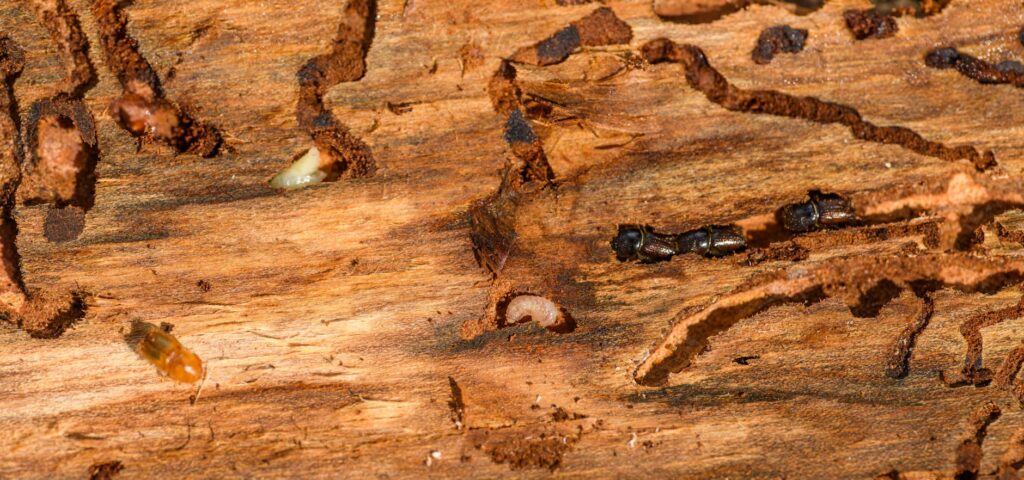
Subterranean termites feed in a pattern that generally follows the grain of wood. They attack the softer springwood and leave the harder summerwood behind, creating a layered appearance inside damaged wood where the softer springwood is consumed and the harder summerwood is left intact. According to UC IPM, this distinctive pattern can often confirm subterranean termite activity from that of other species.
Some termite species deposit light-brown excrement within wood cavities. If you find small pellets or residue inside hollowed-out wood, that can point to a different type of termite rather than the subterranean species common in our service area. Recognizing these differences helps determine the right treatment approach.
How to Spot Termite Activity Inside Your Home
Inside your home, look for wood that sounds hollow when tapped or that shows the grain-following damage pattern described above. Termites found in wood are almost always a sign of a larger colony living in the soil beneath or around the structure.
Mud tubes running along interior walls, floor joists, or support beams are another strong indicator. If you break a mud tube open, you may see live workers and soldiers moving through it. That confirms an active connection between the colony in the soil and the wood inside your home.
Where Termite Activity Shows Up Around Homes
Around the exterior of your home, mud tubes often appear on foundation walls, concrete piers, and wherever soil meets the structure. These earth-hardened tubes allow termites to travel between the ground and their food source while staying protected.
Areas where moisture collects near the foundation are worth checking closely. Subterranean termites rely on soil contact, so signs of activity tend to show up where the ground stays damp and undisturbed close to the home.
Exterior Entry Points Termites Use
Subterranean termites travel underground and gain access to a structure through the soil surrounding and beneath the foundation. Any gap where wood contacts soil or where a foundation meets the ground can serve as an entry point.
During a termite inspection, Brandley Pest Control checks for activity, damage, and risk areas around the home. Identifying these entry points early helps determine the level of risk so the right protective steps can be recommended for your property.
Why Termite Infestation Problems Develop
Termite activity often goes unnoticed because colonies operate underground and inside wood, out of sight. Understanding why infestations develop starts with how subterranean termites find a food source, where they nest, and how they reach your home’s structure.
Outdoor Nesting Areas for Termites
Subterranean termites are soft-bodied and require moisture to survive. According to Kansas State University Extension, colonies are typically located 1 to 30 feet below the soil surface and follow a product or moisture gradient to locate a food source. This means the colony itself may be well away from your foundation, hidden in surrounding soil where moisture levels are favorable.
Food and Shelter That Attract Termites
Wood and other cellulose materials serve as the primary food source for subterranean termites. Any wood in contact with or near soil can draw foraging workers toward your home. Areas where soil stays damp near the foundation can make a property more appealing to foragers working outward from a colony below ground.
How Termites Move Around Homes
Swarms of winged reproductives can appear in spring, summer, or fall. Native subterranean termite species begin swarming as early as January and are mostly finished by early June. They typically swarm in the morning or early afternoon and are not attracted to lights. Spotting these swarmers indoors or near your home is one of the key signs of a subterranean termite infestation.
Trails and Entry Points Termites Use
Shelter tubes, sometimes called mud tubes, are the most commonly seen evidence of a subterranean termite infestation. Workers build these pencil-width tubes from soil and moisture to travel safely between their underground colony and a food source above ground. You may find them on foundation walls, piers, or other surfaces connecting soil to wood.
Evidence of tunneling in wood is another indicator. Together with shelter tubes and swarmers, these are the three primary signs that subterranean termites have reached your home’s structure.
Risks From Signs Of A Termite Infestation
Recognizing signs of a termite infestation early matters because the risks grow over time. Termite damage often develops out of sight, and by the time visible clues appear, the colony may have been feeding for months or longer. Understanding what is at stake helps you decide when to act.
Structural Risks From Termites
Subterranean termites forage from the soil into structures to access wood. According to the University of Georgia termite guide, they can excavate galleries inside wood, sometimes leaving only a thin wooden exterior. This hollowed-out framing may look intact on the surface while losing the strength your home depends on.
Workers build earth-hardened mud tubes from saliva mixed with soil and bits of wood or even drywall. These tubes let colonies travel between the soil and your home’s structure without exposure. If you spot mud tubes along your foundation, termite damage may already be underway behind walls or beneath flooring.
Hidden Termite Damage in Homes
Termite damage is often hidden because colonies feed from the inside out. Drywood termite activity, for example, can go unnoticed until uniform-sized fecal pellets, roughly the size of a grain of sand, appear on a flat surface beneath infested wood. These pellets, called frass, are one of the most common outward signs of a drywood infestation.
The Formosan subterranean termite, an invasive species in the United States native to China, adds another layer of concern. Careful inspection is needed so that colonies are detected and damage is contained before it spreads further through a structure.
Belongings and Moisture Risks From Termites
Because subterranean termites forage into structures to reach wood, any wood-based items inside your home can be at risk. Mud tubes may also indicate moisture pathways that termites use to maintain the humidity their colonies need. These conditions can complicate the overall condition of affected areas over time.
When a Termite Problem Needs Action
Any visible sign of termite activity, whether mud tubes, frass pellets, or hollowed wood, calls for a professional inspection. As UC IPM notes, careful inspection is needed so colonies are detected and damage contained. Waiting can allow feeding to continue unchecked inside walls and structural members.
When drywood termite damage is widespread, whole-structure fumigation may sometimes be necessary. The sooner you confirm what you are dealing with, the more treatment options remain available. Contact Brandley Pest Control to schedule an inspection and determine the best course of action.
Professional Pest Control for Signs Of A Termite Infestation
When you notice signs of a termite infestation around your home, knowing what steps to take can make a real difference. You can correct some conditions on your own, but a professional inspection and treatment plan are often the best path forward. Here is what prevention, inspection, and professional treatment look like.
How to Reduce Attractants for Termites
Homeowners can replace termite-damaged wood and correct conditions that are conducive to subterranean termite activity. Removing sources of moisture is especially important. According to Oregon State University Solve Pest Problems, treatments for subterranean termites will not work unless moisture sources are removed and damaged wood is repaired.
Taking care of these attractants before or alongside professional treatment sets the stage for better long-term protection. Addressing moisture and wood damage on your own is a practical first step when you spot warning signs.
Why Termite Control Starts With Inspection
Careful inspection is needed to detect and contain termite damage so that localized treatments can be used where they matter most. As UC IPM notes, thorough inspection helps make the best use of targeted treatment approaches.
At Brandley Pest Control, our inspection covers activity, damage, and risk areas throughout your property. Once we confirm the presence of subterranean termites or determine the level of risk, we walk you through the findings and recommend the best treatment or pretreatment option.
What to Expect During Professional Termite Treatment
Registered termite treatment products are highly regulated and require a licensed professional to apply. Retail-store products may help with prevention of small or early infestations, but homeowners should seek professional help for established termite problems.
For existing termite issues, Brandley Pest Control primarily uses Termidor HP, a professional-grade product applied using a high-precision injection system. This allows us to treat the entire perimeter of your home by injecting the product directly into the soil at precise, metered intervals without having to dig a trench around the foundation. Termidor HP creates a continuous protective barrier that termites cannot detect.
For homes under construction or new builds, we offer termite pretreatment services. During pretreatment, Termidor HP is applied to the soil before the foundation is poured, creating long-term protection against subterranean termites from the start.
What to Expect From a Termite Control Plan
We also offer Trelona termite bait stations as preventative termite protection. Bait stations are installed around the property on 15-foot centers and work by addressing termite pressure around the home, providing ongoing monitoring and control.
After treatment or pretreatment, we provide inspection and warranty options and recommend annual monitoring to help keep your home protected from termites long term. Brandley Pest Control offers both liquid and bait treatments to address different challenges when treating Eastern Subterranean Termites in our service area.
When bundled with general pest control, our termite protection is part of the Complete Protection Program, giving your home ongoing coverage for termites and common household pests.
Bottom Line on Signs Of A Termite Infestation
Catching a termite problem early starts with knowing what to look for. Mud tubes along your foundation, damaged or hollow-sounding wood, and discarded wings near windows or doors are all warning signs worth taking seriously. Because subterranean termites live in the soil and forage into structures, the visible clues inside your home often point to a larger colony below ground. A professional inspection can confirm activity, assess the extent of any damage, and guide the right next step for your property.
If you notice any of these signs, contact Brandley Pest Control to schedule a termite inspection.
Frequently Asked Questions
What Are the Most Common Warning Signs?
Look for mud tubes running along foundation walls, floors, or other surfaces. Damaged wood that feels soft or sounds hollow when tapped is another indicator. You may also notice discarded wings near entry points, which suggest a recent termite swarm.
Can I Handle a Termite Problem on My Own?
Homeowners can replace damaged wood and correct conditions that attract termites, such as excess moisture near the foundation. However, treatment applications are highly regulated and typically require a licensed professional to carry out properly.
How Does Brandley Pest Control Treat Termites?
Brandley starts with an inspection covering activity, damage, and risk areas. For confirmed infestations, Termidor HP is applied around the perimeter using a high-precision injection system, creating a continuous barrier in the soil without trenching. Trelona bait stations are also available as a preventative option, installed around the foundation on 15-foot centers.
How Often Should My Home Be Inspected?
Brandley recommends annual monitoring after treatment or pretreatment to help ensure your home stays protected over time. During annual visits, bait stations are checked and cartridges are replaced as needed to maintain ongoing protection.