
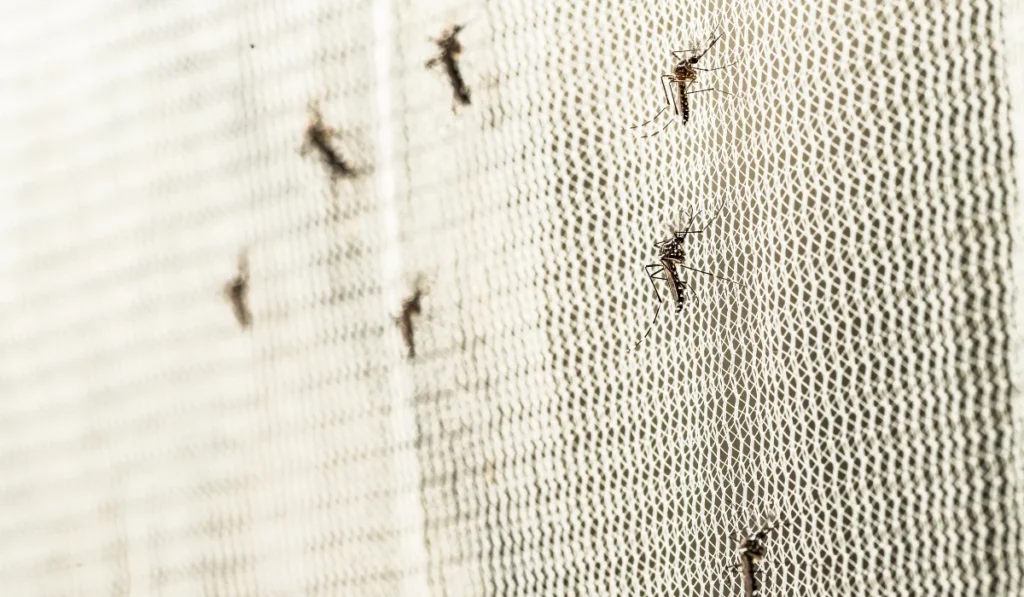
If mosquitoes are still biting during an October evening in Yukon or Edmond, you may wonder when do mosquitoes go away in Oklahoma. Most mosquito activity drops sharply from late October into early November as freezing nights become more common. However, Oklahoma mosquito season does not end on one predictable date.
A single cool afternoon or light frost may slow mosquitoes without eliminating them. Warm fall weather, recent rain, standing water, and sheltered vegetation can keep them active after homeowners expect the season to be over.
Knowing how Oklahoma weather affects mosquito activity can help you decide when to keep using repellent, when to inspect your yard for breeding sites, and when persistent activity calls for professional attention.
When Do Mosquitoes Go Away in Oklahoma?
Mosquitoes in Oklahoma usually become much less active after repeated freezing nights arrive in late October or early November. According to Oklahoma State University’s mosquito guidance, more than 60 mosquito species occur seasonally across the state, generally from March through the first frost in November. A warm, wet fall can extend activity, while an earlier stretch of cold, dry weather may bring relief sooner. (extension.okstate.edu)
Local freeze averages provide a useful estimate, but they do not guarantee when mosquitoes will disappear from a particular yard. The Oklahoma Climatological Survey’s Canadian County climate summary lists October 31 as the average first fall freeze, based on 1991–2020 climate normals and a 50 percent probability benchmark. That date offers helpful context for Yukon, Mustang, Piedmont, and nearby communities, but each fall develops differently.
It also helps to separate reduced activity from the true end of the season. Cooler nights may make mosquitoes harder to notice, while protected adults and aquatic life stages remain present. Regular outdoor activity usually ends only after cold conditions become consistent.
What Oklahoma Mosquito Season Looks Like
Oklahoma mosquito season begins gradually in early spring, builds after rainfall, and can continue well into fall. Temperature affects how quickly mosquitoes develop and how actively adults fly, but water determines where they can reproduce.
The seasonal pattern also changes by species. Floodwater mosquitoes may appear in large numbers after spring rain, while mosquitoes associated with longer-lasting water sources can become more noticeable later in summer.
| Time of Year | What You May Notice | Conditions Driving Activity |
|---|---|---|
| March to early April | Scattered early mosquito activity | Warmer afternoons and the return of seasonal species |
| April through June | Frequent nuisance activity after rain | Temporary pools, wet low areas, and mild temperatures |
| July through August | Continued activity around irrigated or shaded properties | Permanent water sources, vegetation, and summer warmth |
| September through October | Uneven activity that changes with the weather | Fall rain, warm nights, and protected resting areas |
| Late October through November | A sharp decline after freezing weather | Repeated cold nights and fewer suitable breeding conditions |
Early Spring Activity
Some cool-weather species begin appearing in March. Activity may remain limited at first because cold nights slow development and reduce adult movement. As spring rain fills ditches, low areas, containers, and temporary pools, mosquito populations can increase quickly.
The first mosquitoes you notice may not represent a full seasonal surge. Several warm days followed by rainfall create more favorable conditions than temperature alone. That is why a quiet early spring can shift into heavy activity within a short period.
Peak Spring and Summer Activity
Oklahoma State University reports that much of the state’s adult mosquito pest activity occurs during April, May, and June, especially after spring rains. Floodwater species can become abundant when rain fills areas where eggs were previously laid. These mosquitoes may seem to appear all at once because many develop under similar conditions.
Summer heat does not always end the problem. Birdbaths, clogged gutters, irrigation runoff, drainage channels, and neglected containers can continue holding water after natural puddles dry. Shaded plants and shrubs also give adult mosquitoes protected places to rest during the hottest part of the day.
Fall Mosquito Activity
September and October often bring uneven mosquito pressure across Central Oklahoma. A dry, windy stretch may reduce activity, while rainfall followed by mild evenings can support another noticeable increase. Two nearby properties may experience very different conditions based on drainage, irrigation, shade, and the number of water-holding containers.
This weather-dependent pattern explains why the answer to when does mosquito season end in Oklahoma changes from year to year. The calendar offers a general expectation, but freezing weather determines when regular activity declines.
Why Mosquitoes Stay Active Later in Some Years
Fall rainfall can extend mosquito activity by refilling breeding sites that dried during summer. Buckets, toys, plant saucers, tarps, grill covers, wheelbarrows, and clogged gutters may hold enough water for larvae to develop. Low sections of a lawn can create similar conditions when drainage is poor.
Warm spells also give surviving adults another opportunity to fly and feed. Mosquitoes may seem absent during a chilly week, then return when afternoon and evening temperatures rise. Their numbers may be lower than in spring, but activity can remain noticeable around patios, porches, play areas, and shaded landscaping.
Conditions within the yard matter just as much as the regional forecast. Thick shrubs block wind and sunlight, while irrigation keeps the surrounding area damp. An open Mustang yard may dry quickly after rain, while a heavily shaded property in Edmond may hold moisture and support mosquito activity longer.
Does the First Frost Kill All Mosquitoes?
The first frost does not always kill every mosquito. Exposed adults may die or become inactive, but Oklahoma State University notes that emerging larvae and pupae may remain unaffected by a light freeze. Because these immature stages live in water, the surface may stay warm enough to protect them during a brief cold event.
Sheltered adults can also survive short periods of cold. Sheds, crawl spaces, storm drains, thick vegetation, and other protected locations may remain warmer than open areas. When mild weather returns, surviving mosquitoes can become active again.
| Weather Event | Likely Effect on Mosquito Activity |
|---|---|
| Cool fall evening | Adults may fly less, but activity can resume when temperatures rise |
| Light frost | Some exposed adults decline, while protected mosquitoes and aquatic stages may survive |
| Brief freeze | Activity drops, but warm weather can still bring scattered mosquitoes |
| Repeated hard freezes | Regular outdoor activity becomes far less likely |
How Mosquitoes Survive Winter
Mosquito species use different strategies to make it through cold weather. Some survive as eggs, others remain in protected aquatic stages, and certain adult females shelter in places where temperatures stay more stable.
The Centers for Disease Control and Prevention’s Aedes mosquito life-cycle guidance explains that Aedes eggs can survive drying for up to eight months and may survive winter in the southern United States. These eggs can remain attached to the walls of containers until rain or irrigation raises the water level and triggers hatching.
This survival strategy is why winter does not reset a yard completely. A bucket may look dry for months while eggs remain attached above the old waterline. When spring rain returns, the same container can become a breeding site again.
How to Reduce Mosquitoes Before the Season Ends
Mosquito prevention should continue until freezing weather becomes consistent. Start with a careful inspection after rainfall, paying attention to anything that can hold water. Empty buckets, toys, plant saucers, wheelbarrows, and outdoor containers, then position them so they cannot refill during the next storm.
Some breeding sites are easy to overlook. Water can collect in folded tarps, corrugated drain extensions, trash can lids, patio furniture, clogged gutters, and uneven playground equipment. Birdbath water should be refreshed regularly, and irrigation systems should not leave puddles around foundations, patios, or low areas of the lawn.
Reduce Shaded Resting Areas
Adult mosquitoes often rest in cool, protected vegetation during the day. Trim overgrown shrubs, remove unnecessary yard clutter, and improve airflow around patios and other outdoor gathering areas. These changes make the property less inviting without requiring you to remove healthy landscaping.
Yard maintenance cannot prevent every mosquito from entering. Adults may come from neighboring properties, drainage systems, wooded areas, or nearby standing water. Still, removing breeding water and reducing dense resting areas can lower the conditions supporting activity on your property.
Know When an Inspection Can Help
Persistent mosquito activity may point to water or resting areas that are difficult to locate. A thorough inspection can identify drainage concerns, dense vegetation, shaded corners, and containers that are easy to miss during a quick walk through the yard.
Professional mosquito control can also address adult activity while helping you understand what is contributing to the problem. The treatment plan should reflect the size and layout of the property, the level of mosquito pressure, and the conditions found during the inspection.
Plan for the End of Oklahoma Mosquito Season
When do mosquitoes go away in Oklahoma? Most homeowners notice the largest decline from late October into early November, once repeated freezing nights arrive. Until then, mild weather and available water can keep mosquitoes active around Central Oklahoma homes.
Continue checking your yard after rain, correcting drainage problems, and removing water-holding containers throughout the fall. If mosquitoes are still interfering with time outside, Brandley Pest Control can inspect your property, explain what is contributing to the activity, and recommend an approach based on what your yard needs. Contact the local team to schedule an inspection for a home in Yukon, Mustang, Piedmont, Edmond, Oklahoma City, or a nearby community.