
Wasp nest signs can create costly problems when early signs are missed. Learn what to look for, why it matters, and when to call Brandley Pest Control.
Key Takeaways About Wasp Nest Signs
- Spotting increased wasp activity around your eaves, soffits, or outdoor structures is often the first clue that a nest is nearby and growing.
- Different wasp types build nests in different places, so recognizing where and how they nest helps you respond appropriately.
- Wasps can sting when they feel their nest is threatened, making early awareness important for your household’s comfort.
- Professional inspection allows a trained technician to identify the wasp type, locate the nest, and handle the situation safely rather than risk making it worse with DIY methods.
How to Identify Wasp Nest Signs
Knowing what to look for can help you recognize wasp nest signs before a colony grows. Different wasp types build nests with distinct appearances and in different locations, so understanding those differences is the first step toward staying ahead of the problem.
How to Tell Wasp Nest Sign Types Apart
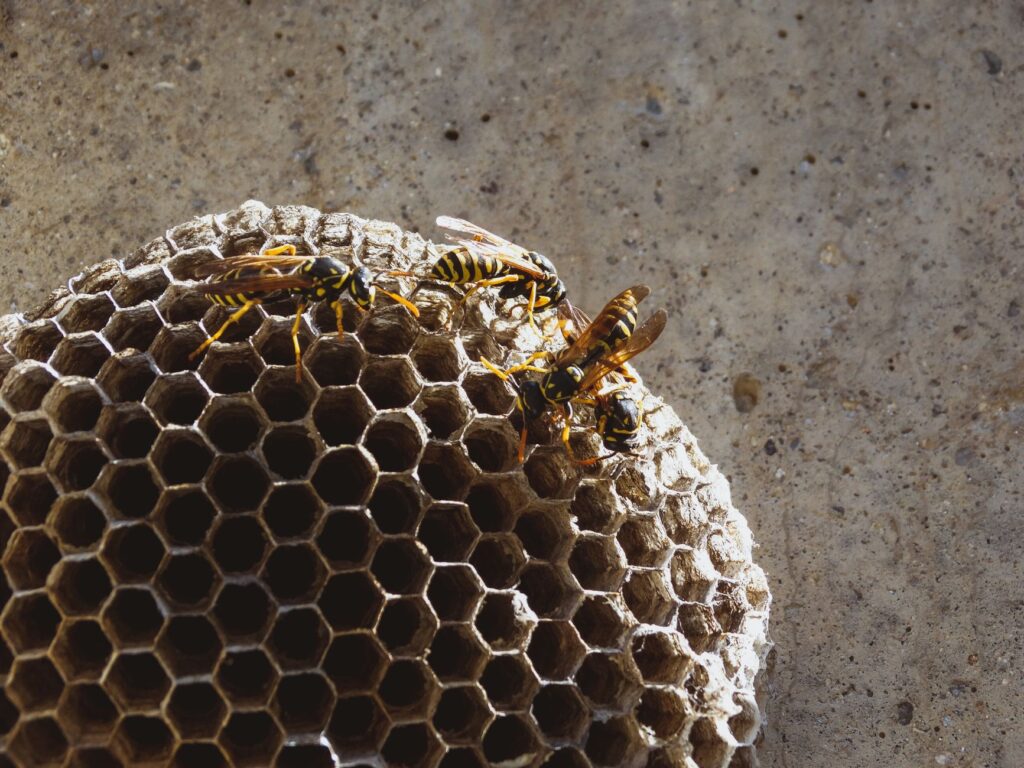
Paper wasp nests are papery and look like honeycombs, with open cells visible from below. Yellowjackets, on the other hand, enter and leave their nest through a small hole, making their nests harder to spot at first glance. According to Oregon State University Solve Pest Problems, these visual differences can help you distinguish between the two types when you notice activity around your home.
Paper wasps chew plant fibers and wood into a papery pulp to construct their nests, giving the structure a rough, fibrous texture If you see wasps repeatedly visiting the same spot or carrying material back to a location, a nest may be under construction nearby.
How to Spot Wasp Nest Sign Activity Inside Your Home
Wasps can build nests in crawl spaces, attics, and walls. You may notice wasps appearing inside your home without an obvious entry point, which can indicate a nest hidden within a wall void or attic space. Buzzing sounds behind drywall or along ceiling lines are another common indicator.
Paper wasps often build nests inside enclosed voids of lighting fixtures, bird boxes, gas grills, and other infrequently used spaces, as Purdue Extension notes. Checking these areas during routine maintenance can reveal nests before they grow larger.
Where Wasp Nest Sign Activity Shows Up Around Homes
Around the exterior of your home, paper wasp nests frequently appear along eaves. Brandley Pest Control can treat eaves up to 30 feet when needed. Yellowjacket nests may be tucked into less visible spots, with only a small entry hole giving away their location.
Motor homes, boats, and other items that sit unused for stretches of time can also harbor nests. Regular visual checks of these areas help you catch wasp nest signs early.
Exterior Entry Points Wasps Use to Access Your Home
Wasps take advantage of gaps and openings around your home to reach sheltered nesting spots. Cracks along siding, openings near eaves, and gaps around crawl space vents can all serve as entry points that lead to interior nesting areas like attics and walls.
Sealing small gaps and entry points around your home helps reduce available nesting areas. Keeping siding, eaves, and outdoor structures in good condition also limits the spaces wasps can use to build their nests.
Why Wasp Nest Problems Develop
Understanding why wasps build near your home helps you spot nest signs earlier. Wasps look for sheltered spots, reliable food sources, and easy access to building surfaces. Because social wasp colonies are annual and a nest is used only during the season it is built, new nests can appear in different locations each year.
Common Outdoor Nesting Areas for Wasps
Different wasp species choose different nesting sites. Guinea wasps (Polistes exclamans) build their nests in protected areas around buildings or equipment, as well as in dense shrubbery. According to Purdue Extension, mud daubers are solitary wasps that construct small nests of mud on the sides of buildings, rafters, bridges, and similar sites. Several yellowjacket species build subterranean nests in areas such as creek banks, lawns, and garden and flower beds.
Food and Shelter Sources That Attract Wasps
Paper wasps are beneficial caterpillar predators, so yards with garden activity can draw them in. Sheltered overhangs, eaves, and equipment housings offer the protected conditions many species prefer. Paper wasp queens overwinter in groups, and if you see them indoors during cooler months, they are not coming from an active nest but from a shelter.
How Wasps Move Around Homes
Early in the season, knocking down a newly started paper wasp nest will cause the founding female to go elsewhere to start again or to join a neighboring nest as a worker. This means a nest removed from one spot may lead to a new nest appearing nearby. Each spring brings fresh nest-building activity in potentially different locations around your property.
Trails and Entry Points Wasps Use
Social wasps sting to defend their colony, which makes high-traffic entry points a concern. Some yellowjacket species can also become aggressive during late summer and fall and may sting unprovoked, according to the University of Minnesota Extension. Gaps around eaves, open rafters, and ground-level holes in lawns or flower beds all serve as access points where wasp activity may concentrate. Keeping an eye on these areas helps you notice nest signs before a colony grows through the season.
Risks From Wasp Nest Signs
Spotting wasp nest signs around your home is more than a nuisance. The type of wasp and the location of the nest determine how much risk you and your property actually face. Understanding those risks helps you decide whether a nest can be left alone or needs to be addressed proactively.
Health Risks Linked to Wasp Nests
The biggest concern with wasp nests near living spaces is the potential for stings. Paper wasps do not aggressively defend their nests the way yellowjackets and other social wasps do, but they can sting if provoked. Nests tucked under eaves, along doorframes, or near walkways raise the chance of an accidental encounter.
Yellowjackets and hornets are more defensive. According to Purdue Extension, some yellowjackets and the European hornet may build colonies inside wall voids, attics, and sometimes basements. A hidden colony in a high-traffic area of your home increases the likelihood of stings for anyone nearby.
Solitary wasps such as mud daubers present a lower sting risk. According to Purdue Extension, these solitary forms do not defend their nest or burrow and seldom sting people. Still, any wasp can sting when handled or accidentally pressed against skin.
Property Damage Caused by Wasp Nests
(no rewrite needed for this sentence) Over time, repeated nest-building on the same surface can leave residue on siding, rafters, and trim. Mud dauber nests can also create unsightly buildup on building surfaces.
Yellowjackets that nest inside wall voids or attics can be especially problematic because the colony may be located far from any visible entry point, making the full scope of the issue difficult to gauge from outside.
Food Areas and Wasp Nest Sign Activity
Nests built near outdoor dining areas, grills, or patios put people in close contact with wasps during meals. Paper wasp nests built in the wrong place, where they are likely to cause stings, should be addressed before the colony grows. Wasps foraging near food preparation or eating areas increase the odds of a defensive sting when someone unknowingly disturbs them.
When to Look Closer at Wasp Nest Sign Activity
Not every nest requires removal. When wasps nest away from where people live or work, they can actually be considered beneficial, and controls may not be needed. However, nests attached to your home’s eaves, near entryways, or inside structural voids deserve a closer look and a professional assessment.
Professional Pest Control for Wasp Nest Signs
When you spot wasp nest signs around your home, knowing how to respond matters. Some nests are manageable early on, while others grow into large colonies that require professional pest control. Understanding what attracts wasps, how inspections work, and what a treatment plan involves can help you stay ahead of the problem.
How to Reduce Attractants for Wasps
According to Mississippi State University Extension, the only way to prevent large numbers of overwintering wasps in attic or other building locations is to practice good, proactive exclusion. Sealing gaps and maintaining your home’s exterior are the most effective first steps.
Staying alert for wasp nests around your home is important. Avoid leaving food or sugary drinks exposed outdoors, and inspect sheltered spots regularly. Paper wasp nests may not require treatment unless they are positioned near people, so not every nest you notice demands immediate action.
Why Wasp Nest Sign Control Starts With Inspection
Different wasp types nest in different places, and misidentifying the species can lead to the wrong approach. Guinea wasps, for example, are often mistaken for yellowjackets, but yellowjackets are yellow and black and build their nests in the ground. Knowing which wasp you are dealing with shapes every decision that follows.
Colonies can be very large and are often located far from the entrance hole, deep into the structure. What looks like minor activity near an exterior gap may point to a much bigger colony hidden inside. That is why a full inspection matters before any treatment begins: a technician checks visible entry points, interior voids, and surrounding structures to map the colony’s actual location.
What to Expect During Professional Wasp Nest Sign Treatment
Professional pest control operators are best equipped to handle above-ground and structural colonies. As Purdue Extension notes, protective gear and quick, efficient application is imperative, especially when late summer colonies may consist of nearly a thousand workers. Attempting to handle a nest of that size on your own often makes the situation worse.
At Brandley Pest Control, our trained technician locates the nest or activity areas and applies professional-grade products designed for wasp control. The exact products depend on the type of wasp and where it is located. We do not treat honey bees, as they are protected, but we can guide you on proper next steps if honey bees are involved.
What to Expect From a Wasp Nest Sign Control Plan
Brandley Pest Control starts with a free phone consultation to identify whether you are dealing with bees, wasps, or hornets. Once we understand the situation, we schedule an initial service. Most of the problems we handle involve wasps near the home and nests along eaves.
Most customers want a consistent treatment plan to keep wasps and hornets away for the entire season. Wasps and hornets are included in our general pest control packages, which also cover inspection, interior and exterior treatment, de-webbing, and wasp nest removal. Small, early season colonies may be easier to address, but waiting too long can allow above-ground colonies to grow well beyond what a homeowner should attempt alone.
Bottom Line on Wasp Nest Signs
Spotting wasp activity early gives you the best chance to address a nest before it grows through the season. Watch for wasps flying in repeated paths near your roofline, eaves, or sheltered areas of your property. Paper wasp nests last only one season, but colonies can become large by late summer. Sealing gaps and entry points is the most effective exclusion step you can take, according to Mississippi State University Extension, to keep wasps from nesting in attics or wall voids.
If you notice a nest forming or increased wasp traffic around your home, contact Brandley Pest Control for a free phone consultation so a trained technician can identify the type of wasp and handle the situation safely.
Frequently Asked Questions
What Are the First Signs of a Wasp Nest on My Property?
The earliest clue is usually a steady pattern of wasps flying to and from the same spot. You may notice them near eaves, soffits, or dense shrubbery. A small, papery structure beginning to take shape in a sheltered area is another clear indicator that a nest is underway.
Should I Try to Remove a Wasp Nest Myself?
DIY removal often makes the situation worse. Wasps can sting if provoked, and store-bought sprays may not fully address the problem. Professional handling is recommended, especially for above-ground and structural nests, because proper protective gear and targeted application methods are needed.
How Can I Prevent Wasps From Nesting Around My Home?
Good, proactive exclusion is the best approach. Seal gaps and entry points, maintain siding and eaves, and avoid leaving food or sugary drinks exposed outdoors. These steps reduce the sheltered areas wasps look for when choosing a nesting site.
Does Brandley Pest Control Handle All Types of Wasps?
Brandley Pest Control treats wasps and hornets as part of the standard home pest control plan, including nests along eaves up to 30 feet.