
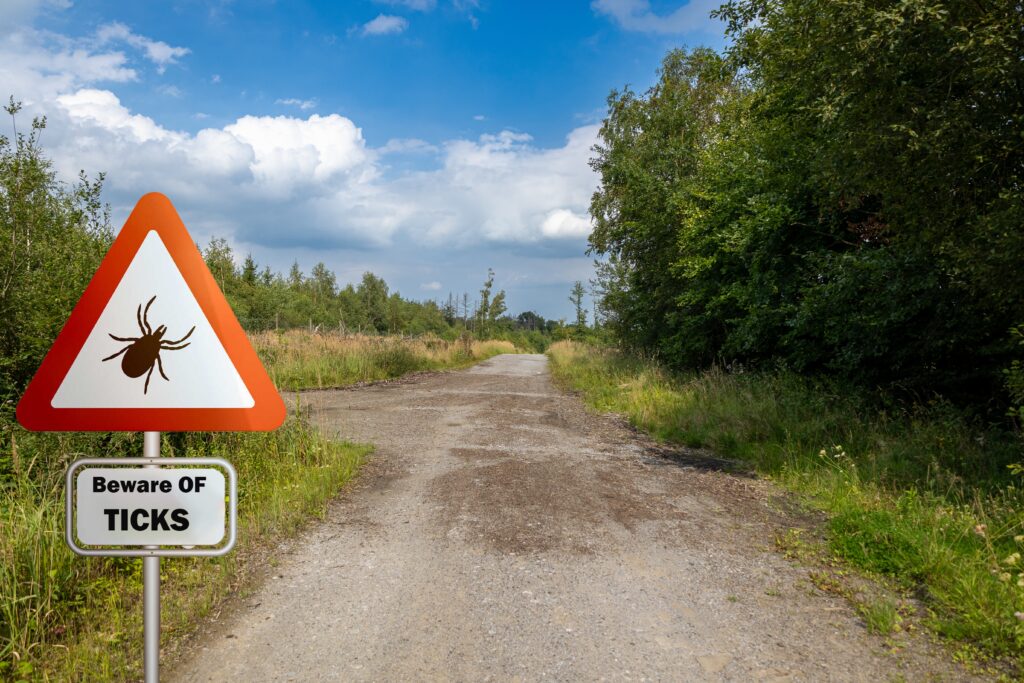
Ticks in Oklahoma are usually one of four species homeowners need to recognize first: the lone star tick, American dog tick, blacklegged tick, and brown dog tick. Some are more common in yards and wooded areas. Others can become a bigger concern around pets or even indoors.
Tick activity often rises from spring through fall, but Oklahoma homeowners should not treat ticks as a summer-only problem. Blacklegged ticks can stay active in cooler months, and brown dog ticks can establish themselves around dogs and kennels.
Knowing the most common species can help you spot a problem sooner, reduce tick habitat, and decide when professional tick control makes sense.
Common Ticks in Oklahoma
Oklahoma’s four common tick species
Homeowners in Oklahoma typically run into one of four tick species, and each one differs in look, habitat, and disease risk.
According to the Oklahoma State University Extension, four tick species are frequently found throughout the state: the lone star tick, American dog tick, blacklegged tick, and brown dog tick. Understanding these specific pests is highly important for local homeowners, pet owners, and families who spend time outdoors.
Lone Star Tick
The lone star tick is one of the ticks Oklahomans are most likely to encounter outdoors. Female lone star ticks are easier to identify because they have a single white spot on the back. Males do not have that same single spot, but they may have pale markings near the back edge of the shield.
This tick is active from early spring through late fall and often shows up in brush, tall grass, shaded areas, wooded edges, and trails. Lone star ticks can feed on humans in several life stages, which is one reason people notice them so often after yard work, hiking, hunting, or time near overgrown vegetation.
Lone star ticks are also tied to several health concerns, including ehrlichiosis, tularemia, STARI, Heartland virus, and alpha-gal syndrome. The CDC explains that alpha-gal syndrome can develop after a tick bite, with the lone star tick most often associated with cases in the United States.
American Dog Tick
The American dog tick is a brown tick with white, gray, or silver markings. Adults are the stage most likely to bite people, and they are often active in spring and early summer.
This species matters in Oklahoma because it is closely tied to Rocky Mountain spotted fever risk. The Oklahoma State Department of Health identifies the American dog tick as the tick most closely associated with RMSF.
That does not mean every American dog tick bite leads to illness. Still, anyone who develops fever, rash, headache, muscle pain, nausea, or other symptoms after a tick bite should contact a healthcare provider and mention the recent bite or outdoor exposure.
Blacklegged Tick
The blacklegged tick, also called the deer tick, is easy to overlook because it does not have the bold white markings of the lone star tick or American dog tick. Adults are active in fall and winter, which means they can be present when many people are no longer thinking about tick checks.
Blacklegged ticks are widely known because of Lyme disease, but Oklahoma’s local risk profile is different from high-incidence regions in the Northeast and Upper Midwest. Lyme disease has not historically been reported at high levels in Oklahoma, while other tickborne diseases are more locally relevant.
That said, blacklegged ticks are still worth knowing. If you spend time in wooded or brushy areas during cooler months, check yourself, your children, and your pets after coming indoors.
Brown Dog Tick
The brown dog tick is a reddish-brown tick that primarily feeds on dogs. Unlike many outdoor ticks, this species can become an indoor problem. It may establish itself in homes, kennels, porches, garages, or other areas where dogs spend time.
Adults are often found around a dog’s ears and between the toes. Younger ticks may be found near the back of the neck. If you keep finding ticks on your dog, in pet bedding, along baseboards, or near indoor cracks and crevices, the issue may be more than a one-time outdoor exposure.
When Is Tick Season in Oklahoma?
Tick season in Oklahoma often starts in early spring and continues into late fall, especially for lone star ticks. American dog tick activity is usually strongest in spring and early summer. Oklahoma State University Extension notes that most Oklahoma Rocky Mountain spotted fever cases occur between April and September, with peak case numbers in May, June, and July.
Cooler months do not remove the risk completely. Blacklegged tick adults can be active from fall through early spring. Brown dog ticks can remain active indoors if they establish around pets.
For homeowners, the practical takeaway is simple: tick prevention should be strongest in spring, summer, and early fall, but tick checks still matter after outdoor activity in cooler months.
Why Oklahoma Tick Risk Is Not Only About Lyme Disease
Lyme disease gets much of the national attention, but it should not be the only concern for Oklahoma homeowners. The Oklahoma State Department of Health lists several tickborne diseases in the state, including Rocky Mountain spotted fever, ehrlichiosis, tularemia, and anaplasmosis.
The species involved makes a difference. American dog ticks are closely linked to RMSF risk in Oklahoma. Lone star ticks are associated with ehrlichiosis, tularemia, STARI, Heartland virus, and alpha-gal concerns. Brown dog ticks matter because they can move the problem closer to pets and indoor spaces.
The right response is not panic. It is prompt tick removal, regular tick checks, pet protection, and yard conditions that make the property less inviting to ticks and the animals that carry them.
How to Reduce Tick Exposure Around Your Yard
Ticks are more likely to survive in shaded, brushy, humid areas where hosts pass through. Around a home, that often means tall grass, leaf litter, brush piles, wooded edges, fence lines, and shaded pet resting areas.
The CDC recommends reducing tick habitat around the yard by removing leaf litter, clearing tall grass and brush, mowing often, stacking wood neatly in dry areas, and creating a wood chip or gravel barrier between lawns and wooded areas where practical.
A few habits can also lower exposure after time outside:
- Check yourself, children, pets, coats, and gear after being in grassy, brushy, or wooded areas.
- Look behind knees, around the waist, under arms, around ears, in hair, and between the legs.
- Ask your veterinarian about tick prevention for dogs and cats.
- Keep pet bedding clean and inspect it if ticks keep appearing indoors.
- Keep play areas, patios, and pet areas away from brushy edges when possible.
Repellents can help when used correctly.
What to Do If You Find a Tick Attached
Remove an attached tick as soon as possible. The CDC’s tick removal guidance recommends using clean, fine-tipped tweezers to grasp the tick close to the skin and pull upward with steady, even pressure.
Do not twist, jerk, burn, cover the tick with petroleum jelly, or use nail polish to force it to detach. After removal, clean the bite area and your hands with soap and water, rubbing alcohol, or hand sanitizer.
Watch for symptoms in the days and weeks after the bite. If you develop a rash, fever, headache, muscle pain, or other concerning symptoms, contact a healthcare provider and explain when the bite happened and where you may have picked up the tick.
When Professional Tick Control Makes Sense
Professional tick control can help when ticks keep showing up after normal yard maintenance, when children or pets are picking up ticks in the yard, or when brown dog ticks may be established indoors.
It can also be useful before peak spring and summer activity if your property has shaded fence lines, wooded edges, tall grass nearby, or pets that spend time outside.
Brandley Pest Control offers tick control in Oklahoma for homeowners dealing with recurring tick activity. Their tick service page describes outdoor tick treatments, including liquid and granular yard treatment options, and service for Oklahoma properties where ticks are affecting yards, patios, and outdoor areas.
Schedule Tick Control in Oklahoma City
If ticks are showing up in your yard, on your pets, or inside your home, Brandley Pest Control can help you decide what to do next. The team provides tick control services for Oklahoma homeowners and offers a free quote option through the website.
To get started, contact Brandley Pest Control and describe where you are seeing ticks, how often they are appearing, and whether pets or indoor areas are involved.
Frequently Asked Questions
What is the most common tick in Oklahoma?
The lone star tick is the species most commonly encountered by people in Oklahoma during outdoor recreational activities. It is active from early spring through late fall, seeks hosts aggressively, and is found across the state in wooded areas, shaded yards, brush, and tall grass.
Does Oklahoma have Lyme disease ticks?
The black-legged tick, which transmits Lyme disease in northeastern states, is present in Oklahoma. However, Lyme disease has not been shown to have high prevalence in Oklahoma because larval black-legged ticks here typically feed on lizards rather than the mice that serve as the primary reservoir host for the Lyme disease bacteria elsewhere. Lyme disease cases reported in Oklahoma are often attributed to false-positive screening tests or exposure in other states.
When is tick season in Oklahoma?
Lone star and American dog ticks are most active from early spring through late fall. Black-legged ticks are most active from late September through early spring. Brown dog ticks are active year-round indoors. Oklahoma’s mild winters mean tick activity rarely ceases entirely, making consistent prevention habits more effective than seasonal-only precautions.
How do I remove a tick safely?
Use fine-tipped tweezers to grasp the tick as close to the skin surface as possible and pull upward with steady, even pressure. Do not twist or jerk. Clean the bite area with rubbing alcohol or soap and water after removal. Do not use petroleum jelly, nail polish, or heat to remove a tick. The CDC’s tick removal guidance recommends saving the tick in a sealed container if you want it identified later. Monitor the bite site for a rash over the following two weeks and consult a healthcare provider if symptoms develop.