
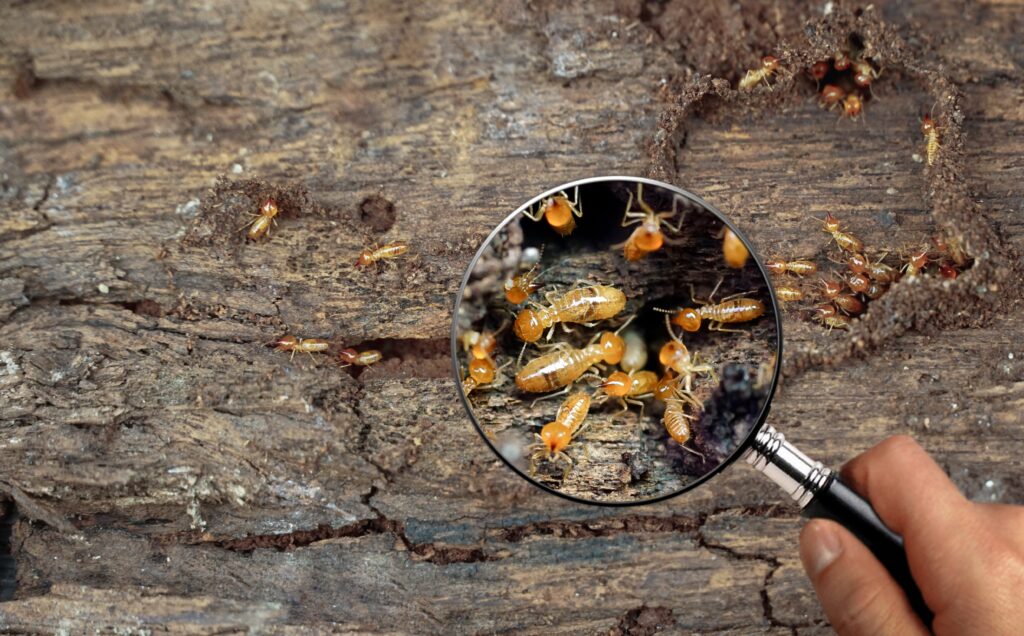
Termites in Oklahoma are not a seasonal problem; colonies feed continuously through every month of the year. The eastern subterranean termite is established in all 75 Oklahoma counties and is responsible for the overwhelming majority of structural damage in the state. Oklahoma State University Cooperative Extension Service classifies it as one of the most economically significant structural pests in Oklahoma. The state’s red clay soil retains moisture well and stays workable through most of the year, creating ideal conditions for year-round termite foraging. Finding swarmers, mud tubes, or hollow-sounding wood is rarely an early warning; by the time these signs appear, a colony has typically been active for years.
Key Takeaways
- The eastern subterranean termite is present in every Oklahoma county and feeds year-round. There is no off-season.
- Swarmers indoors are the most reliable confirmation of an established colony. When winged termites emerge inside the home, an active colony is already living in or under the structure.
- Mud tubes on foundation walls, hollow-sounding wood, and stuck doors and windows are the physical signs most commonly found before a homeowner notices active termites.
Signs of Termites in an Oklahoma Home
Most Oklahoma homeowners discover a termite infestation from secondary evidence rather than from seeing live termites. Mud tubes, shed wings, hollow wood, and stuck doors and windows appear before the termites themselves do, and knowing where to look for each one is the fastest way to catch an infestation before the damage spreads.
Swarmers and Shed Wings
Swarmers are the winged reproductive members of a mature termite colony. They emerge in large numbers on warm spring afternoons, usually after a rain, and their purpose is to find new locations and establish new colonies. In Oklahoma, subterranean termite swarms occur primarily from March through May, though Oklahoma State University Cooperative Extension Service documents swarmers emerging in every month of the year.
Finding swarmers indoors, from walls, floors, window frames, or foundation gaps, is the most reliable confirmation of an established colony living in or directly beneath the structure. Because colonies must be several years old before they produce swarmers, indoor emergence means the infestation has had years to develop before becoming visible.
Swarmers lose their wings quickly after landing. Finding piles of discarded wings on windowsills, near air vents, or along door frames without seeing the swarm itself is the most common way homeowners first notice swarmer activity.
Mud Tubes on Foundation Walls
Subterranean termites build mud tubes to travel between their underground colonies and the wood in structures above the soil. These tubes are the most reliable physical identifier of subterranean termite activity. Mud tubes are ¼ to ½ inch wide, constructed from soil and termite secretions, running up foundation walls, over concrete surfaces, across floor joists, and through cracks between boards and beams.
Finding a mud tube does not always confirm an active infestation, since termites sometimes abandon tubes, but any mud tube warrants a professional inspection. Active tubes are solid and intact; abandoned tubes may appear dry and crumble when pressed.
Wood That Sounds Hollow or Shows Damage
Subterranean termites consume wood from the inside out, leaving the outer surface intact until significant internal damage has already occurred. Tapping suspect wood and listening for a hollow sound is a useful field test. Probing wood with a screwdriver that penetrates easily through what should be solid framing is a stronger indicator. Additional signs include floors that feel soft underfoot, paint that bubbles or blisters on wood surfaces without an apparent moisture source, and doors and windows that stick or become difficult to operate as frames shift under structural stress.
How to Tell Termites From Flying Ants in Oklahoma
Swarm season brings consistent confusion between termite swarmers and flying ants, both of which appear in spring and can be similar in size and color. Misidentification is common enough that Oklahoma State University Cooperative Extension Service’s Plant Disease and Insect Diagnostic Laboratory receives many inquiries about termite and ant identification each spring.
The fastest visual separators:
- Wings: Termite swarmers have two pairs of equal-length wings extending well beyond the body. Flying ants have wings of unequal length, with the front pair noticeably larger.
- Waist: Termites have a straight, thick waist. Ants have a pinched, narrow waist.
- Antennae: Termite antennae are straight. Ant antennae are elbowed.
If you find piles of shed wings without seeing the swarm, the wings themselves confirm identification: equal-length wings indicate termites; mismatched lengths indicate ants.
Oklahoma Termite Species: What Is Actually Here
Three termite types are relevant to Oklahoma homeowners, though their risk levels are not equal. The eastern subterranean termite is the only species with a permanent, statewide structural pest presence.
Eastern subterranean termites (Reticulitermes flavipes) are established throughout all 75 Oklahoma counties and responsible for the vast majority of structural damage in the state. They live underground, require consistent soil moisture, build mud tubes to reach above-ground wood, and forage continuously through every season. Oklahoma’s red clay soil creates ideal moisture conditions for colony expansion across the entire state.
Drywood termites are not established in Oklahoma. They arrive occasionally as hitchhikers in imported furniture, antiques, or wood products. Unlike subterranean termites, drywood termites live entirely inside the wood they infest, require no soil contact, and do not build mud tubes. The diagnostic sign is frass, tiny six-sided fecal pellets about 1/32 of an inch long that accumulate in small piles on windowsills or along baseboards below the infested wood. Sending collected frass to the insect diagnostic laboratory in Stillwater confirms the species. Drywood termite infestations are smaller and slower-developing than subterranean infestations but still require professional treatment.
Formosan termites are not established in Oklahoma. This aggressive invasive species has been documented near the Texas/Oklahoma border and could expand northward over time, but it is not currently a structural pest concern for Oklahoma homeowners.
Why Oklahoma Homes Are at Risk Year-Round
Subterranean termites in Oklahoma do not go dormant in winter. Cold surface temperatures slow above-ground activity, but colonies continue foraging in the deeper, warmer soil below the frost line throughout the year, which means there is no calendar month when termite feeding stops or when an inspection becomes less necessary.
Oklahoma’s red clay soil compounds the risk. Clay soil retains moisture well and remains workable at relatively low temperatures, providing the consistent ground moisture that subterranean termite colonies require to thrive. Homes with soil-to-wood contact at the foundation, wood debris near the structure, or moisture issues in crawl spaces and basements provide additional conditions that sustain termite foraging pressure close to the structure. A mature colony averages several hundred thousand workers feeding continuously, hollowing structural framing from the inside out before visible damage appears on the surface.
How to Reduce Termite Risk Around an Oklahoma Home
Because subterranean termites require soil contact and moisture to reach structural wood, most prevention focuses on removing those conditions from the area around the foundation. Eliminating soil-to-wood contact is the single highest-priority step for most Oklahoma homes.
- Eliminate soil-to-wood contact. Keep structural wood, siding, and door frames from making direct contact with the soil. A non-wood barrier or at least a six-inch gap between soil grade and wood framing reduces the primary entry pathway.
- Fix moisture issues around the foundation. Leaking gutters, poor drainage, and standing water near the foundation maintain the moist soil conditions termite colonies prefer. Directing water away from the foundation and fixing any moisture sources reduces colony foraging pressure close to the structure.
- Remove wood debris near the structure. Firewood stacked against the house, wood debris, leaf piles, and dead stumps near the foundation give termite colonies a food source and a route toward the structure. Remove or relocate these materials.
- Seal foundation cracks and utility penetrations. Subterranean termites enter slab structures through expansion joints, shrinkage cracks, and plumbing penetrations. Sealing these with silicone caulk removes the access points closest to structural wood.
When to Call Brandley Pest Control
Call us when you find swarmers or shed wings inside the home, when mud tubes appear on foundation walls or floor joists, when wood in floors or walls sounds hollow when tapped, or when doors and windows are sticking without an obvious cause. Any of these signs means a professional inspection is the right next step before the infestation progresses further.
Professional service makes sense when:
- Swarmers or shed wings have been found indoors.
- Mud tubes are visible on foundation walls, crawl space framing, or exterior concrete.
- Wood in floors, walls, or structural framing sounds hollow when tapped.
- Doors or windows are sticking or no longer closing properly without a clear cause.
- You are buying or selling a home and need a professional termite inspection report.
- You want preventive treatment and an annual inspection before visible signs appear.
Brandley Pest Control provides termite control services throughout the Oklahoma City metro area, including thorough inspections, Trelona bait system and Termidor HP2 treatments, pre-construction treatments, and real estate inspection reports. Termite services come with a renewable one-year warranty. Free inspections are available when you schedule service.
Schedule a Termite Inspection in Oklahoma City
If you have found any sign of termite activity or want a professional assessment before problems develop, we can inspect the property and recommend the most effective treatment approach for your home.
Contact Brandley Pest Control or call (405) 296-2470 to schedule an inspection. We often have next-day availability and same-day service in some cases.
Frequently Asked Questions
When do termites swarm in Oklahoma?
Subterranean termites in Oklahoma swarm primarily from March through May, typically on warm afternoons after rain. Oklahoma State University Cooperative Extension Service documents swarmers from every month of the year, but spring swarms are the largest and most visible. Finding swarmers indoors at any time of year warrants an immediate inspection.
Do termites in Oklahoma go dormant in winter?
Subterranean termites do not go dormant. Cold temperatures slow above-ground activity, but colonies continue foraging in deeper, warmer soil below the frost line throughout winter. Termite feeding continues year-round in Oklahoma, which is why annual inspections matter even in months when swarmers are not visible.
How do I tell termites from flying ants?
The fastest separators are wings and waist. Termite swarmers have equal-length wings that extend well beyond the body, a straight thick waist, and straight antennae. Flying ants have wings of unequal length, a pinched narrow waist, and elbowed antennae. If you find piles of shed wings without seeing the insects, equal-length wings confirm termites; mismatched lengths confirm ants.
Are Formosan termites in Oklahoma?
Formosan termites are not established in Oklahoma. This invasive species has been documented near the Texas/Oklahoma border but has not spread into the state as a structural pest. The eastern subterranean termite is responsible for the overwhelming majority of termite damage across all 75 Oklahoma counties.
What treatments does Brandley Pest Control use for termites?
Brandley uses the Trelona bait system and Termidor HP2 treatment, both of which are highly effective and safe for people and properties. Pre-construction treatments are also available for new builds. All termite services include a renewable one-year warranty.