
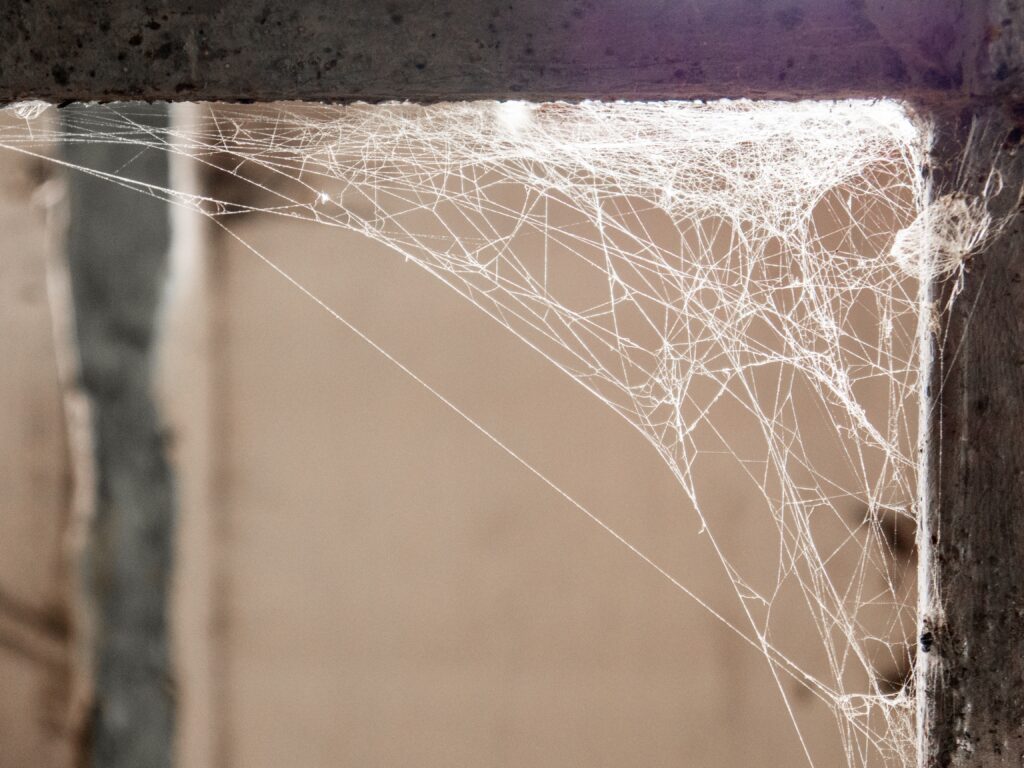
You wipe away spider webs from the ceiling corners, vacuum the baseboards, and finally feel like the room looks clean again. A few days later, thin strands of webbing start showing up in the same spots near the windows, doorway, or laundry room ceiling. That pattern has many homeowners searching for the spider webs in corners meaning and wondering why spiders keep returning indoors.
Spiders seem to prefer corners, and they keep coming back even after regular cleaning. It’s not random behavior. These arachnids choose these spots for very specific reasons tied to safety, structure, and food. This guide explains why spiders build webs in corners and what you can do to reduce recurring webbing. It also explains when to get professional spider control.
Key Takeaways About Spider Webs in Corners
Spider webs in corners: which species is responsible
Different spiders build webs for different reasons, and the shape, location, and condition of a web in your home’s corners can help narrow down which species you are dealing with. Brown recluse and black widow spiders favor the same dark, undisturbed corners as funnel weavers and cobweb spiders, so telling them apart matters.
- Spider webs in corners usually mean a web-building spider has chosen a quiet, low-traffic spot to catch insects. The webs are not a sign of structural harm, but they can become unsightly nuisances over time.
- Different spider species produce different web styles. Identifying the web type in your corners can help you understand which spider is present and whether it needs attention.
- Reducing the insects that spiders feed on is one of the most important steps in long-term spider control. Removing webs alone may not keep spiders from returning.
- A whole-home approach that combines insect control, web removal, monitoring, and sealing entry points can help manage spider activity throughout your home.
How to Identify Spider Webs in Your Home’s Corners
Finding spider webs in corners usually means a web-building species has settled in a quiet spot to catch prey. The web shape, placement, and condition can tell you which type of spider you are dealing with and how active the area is. Understanding what to look for helps you figure out whether a web is fresh, abandoned, or part of a larger pattern of activity.
How to Tell Spider Web Types Apart in Corners
Different spider species build different web structures. Funnel-web species, for example, include dozens of similar-looking species across multiple genera such as Agelenopsis and Hololena. These funnel-building species can be difficult to tell apart because so many share a similar appearance and web style. Their webs taper into a narrow retreat where the spider waits.
Orb weaver species take a different approach. Their webs are constructed with several anchor lines followed by many radii of non-sticky webbing, and then spirals of sticky silk are added to capture prey. Some orb weaver species, like the Joro spider, build large webs that may appear gold-colored. Adult female Joro spiders can reach up to 1¼ inches in body size with long legs.
How to Spot Spider Web Activity Inside Your Home
A web that collects dust and has no spider nearby is likely abandoned. A clean, intact web with a spider present or fresh prey remnants signals current activity. Some species consume any damaged webbing before rebuilding, so a pristine web in a corner may belong to a species that regularly repairs its structure.
Each spider species may have different biology and habits. Paying attention to web shape and location gives you a clearer picture of which species are present and how established they are in your living space.
Where Spider Web Activity Shows Up Around Your Home
Brown recluse spiders typically live in dark, undisturbed areas such as closets, garages, attics, storage rooms, and behind furniture. Black widow spiders prefer similar conditions and are typically found in garage corners and around hot water tanks. Both species rely on areas with minimal foot traffic and consistent shelter.
Exterior Entry Points Spiders Use to Get Inside
Spiders and their prey use cracks and crevices to gain access to structures. Gaps around door sweeps, foundation edges, and other openings serve as pathways for multiple species to move inside. Sealing these openings is one of the general steps you can take to keep spiders from entering and to discourage them from staying.
Brandley Pest Control’s service includes inspecting door sweeps, gaps, cracks, and other entry points to limit spider access and movement throughout the home. Regular de-webbing as part of ongoing service also removes webs and egg sacs, making the area less attractive for spiders to return.
Why Spider Webs Keep Appearing in Corners
Finding spider webs in corners usually means web-building spiders have found a quiet spot with access to food. According to Kansas State University Extension, species that build webs often do so in corners and out-of-the-way places, while active hunters tend to stay hidden during the day and roam at night. Corners offer the structural support spiders need to anchor silk lines, making them a natural choice for web placement.
Outdoor Nesting Areas That Attract Spiders to Your Home
Spiders may build temporary shelters and leave silk trails under rocks, logs, or other protected areas outdoors. Some species, including jumping spiders, can overwinter as adults, immatures, or eggs in these sheltered spots. When outdoor populations grow near your home, web activity around exterior corners and covered areas can increase.
Food and Shelter That Attract Spiders to Your Home
Web-building spiders rely on their webs to catch food. When insects are plentiful around your home, spiders have a steady food supply that encourages them to stay and keep building. You can check in and under existing webs to see what insects have been captured, which helps identify the food source drawing spiders in.
Spider silk serves multiple purposes beyond catching prey. It is used to build snares, make egg cases, create draglines, and construct shelters and retreats. A web tucked into a corner may serve as both a feeding station and a protected retreat for eggs or resting spiders.
How Spiders Move Through Your Home
Not every spider you find indoors builds a web. Some hunting spiders, such as wolf spiders, do not spin webs or use silk to subdue prey. That means webs in your corners point to specific web-building species rather than all spiders in your home. When those web builders find reliable food in one area, new webs can appear in nearby corners as the population grows.
Trails and Entry Points Spiders Use Indoors
Old spider webs left in place can harbor infestations over time. According to UC IPM, removing old spider webs along with old bird, rodent, bee, and wasp nests helps reduce conditions that support continued spider activity. Regular web removal around your home disrupts the shelter spiders depend on and makes those corners less attractive for rebuilding.
Risks From Spider Webs in Corners
Finding spider webs tucked into corners of your home is more than a housekeeping issue. Those webs tell you spiders have found a reliable food source nearby, and the longer the webs stay undisturbed, the more problems can develop. Understanding the risks helps you decide when casual cleaning is enough and when a closer look is warranted.
Health Risks Linked to Spider Infestations
Cobweb spiders build messy, irregular webs with sticky threads in dark corners of homes and outbuildings. When these webs go undisturbed, they can become extensive, gathering dust and taking on a white “cobweb” appearance. That dust-laden webbing can make corners look neglected and become difficult to clean the longer it stays in place, especially in bedrooms, closets, or other lived-in spaces.
Webs can also contain egg sacs. Spider egg sacs may be found on floors, walls, and ceilings alongside webbing. Leaving egg sacs in place allows new spiders to hatch indoors, which can keep the cycle going in your home.
Property Damage From Spider Webs in Corners
Spiders themselves rarely damage building materials, but accumulated webbing creates a persistent nuisance. Dusty, tangled webs along ceiling corners, baseboards, and window frames make a home look neglected. In outbuildings and garages, webbing can cover stored items and become difficult to remove once it collects debris over weeks or months.
Food Areas and Spider Web Activity in Homes
Webs in or near food-preparation areas signal that insects are present in those spaces. Funnel weavers spin sheet-like webs with a funnel retreat and wait for insects to walk or fly into the web. When the spider detects vibrations from trapped prey, it rushes out to capture the insect. Webs near a kitchen or pantry corner suggest an active insect population that the spiders are feeding on.
When to Look Closer at Spider Activity
A single web in an out-of-the-way corner may not warrant concern. However, extensive webbing across multiple rooms, visible egg sacs, or webs that reappear quickly after cleaning suggest a larger issue. Funnel weavers often remain hidden during the day and come out onto the sheet part of their webs at dusk, so checking corners in the evening can reveal activity you might miss during daylight hours.
If webs keep appearing in closets, garages, attics, or storage rooms alongside other insect activity, the situation may call for monitoring and a broader look at insect control throughout your home.
Professional Pest Control for Spiders
When spider webs keep appearing in the corners of your home, removing them yourself can feel like a never-ending task. According to Mississippi State University Extension, sweeping cobwebs out of the corners of garages, windows, and rooms removes the webs, but the spiders that built them often escape and rebuild. A professional approach focuses on sustained control rather than a single cleanup.
How to Reduce Attractants for Spiders
Spider control efforts should focus on removing webs and hiding places throughout your home. Old spider webs can harbor infestations, so clearing them regularly is an important first step you can take on your own. Pay attention to both interior and exterior areas where webs collect.
Keep in mind that not every spider you encounter relies on webs. Wolf spiders are ground-inhabiting spiders that do not build webs but wander about on the ground in search of prey. Some spiders stalk their prey and jump forward to capture it. Reducing hiding places helps address these wandering species alongside web-building ones.
Why Spider Control Starts With an Inspection
Brandley Pest Control‘s Pest Maintenance Plan (PMP) includes a communication and inspection step at every visit. Our service professionals look for web activity in corners, around entry points, and in undisturbed areas. We also inspect door sweeps, gaps, and cracks to identify where spiders may be moving through your home.
Because brown recluses favor dark, undisturbed spaces that homeowners may overlook, inspection helps identify those problem spots early. We place glue monitors to track spider activity and pinpoint where control is most needed.
What to Expect During Professional Spider Treatment
As part of our service, we brush down homes to remove spider webs and egg sacs from both interior and exterior areas. As Texas A&M AgriLife Extension notes, removing spider webs from interior and exterior areas is a core part of spider control. This de-webbing step is included in every PMP visit.
Brown recluses are insect feeders, so controlling other insects is a key part of long-term spider management. Our approach includes targeted insect control through inside and outside crack and crevice treatment. By maintaining an insect-free environment, we remove the food source that draws spiders in.
Black widow spiders rely heavily on their webs to catch food. Regular web removal disrupts their habitat and makes the area less attractive for them to return. Combined with insect control, this approach helps keep black widow activity under control both inside and outside the home.
What to Expect From a Spider Control Plan
The PMP from Brandley Pest Control combines insect control, monitoring with glue boards, de-webbing, and entry point improvements into a whole-home approach. This ongoing plan addresses spider activity over time rather than relying on a single treatment. Same-day scheduling is available when you need to start right away.
Service frequency options include quarterly, bi-monthly, and monthly visits depending on your home’s square footage and needs. Our coverage area includes Yukon, Piedmont, Edmond, Mustang, El Reno, Nichols Hills, Oklahoma City, Bethany, and Moore. Add-on attic dust or crawl space dusting is also available for homes that need attention in those hard-to-reach areas.
Spider Webs in Corners Meaning: Bottom Line
Spider webs in corners generally mean that web-building spiders have found a quiet, undisturbed spot where they can wait for insects to wander into their silk. The webs point to insect activity in your home that may be worth addressing. Removing webs is a good first step, though the spiders responsible often escape and rebuild. A more lasting approach focuses on reducing insect prey, sealing entry points, and monitoring activity over time.
If you are seeing persistent webbing in your home, contact Brandley Pest Control to schedule an inspection and get a plan tailored to your situation.
Frequently Asked Questions
Why do spiders keep building webs in the same corners?
Web-building spiders tend to choose corners and out-of-the-way places because those areas are undisturbed. When conditions remain the same, spiders will return and rebuild after their webs are removed. Regular cleaning combined with reducing their insect food source can make those spots less appealing over time.
Does a web always mean the spider is still nearby?
Not always. Some webs are abandoned while others are actively maintained. If you notice fresh silk or see insects caught in a web, the spider is likely still using it. Older, dusty webs are more likely to be vacant.
Are corner webs a sign of a bigger pest problem?
Webs can indicate that insects are present in the area, since spiders rely on catching prey to survive. Addressing the underlying insect population encourages spiders to move on rather than rebuild.
What does Brandley Pest Control do about spider webs?
Our service includes de-webbing interior and exterior areas, targeted insect control, and inspection of entry points such as door sweeps, gaps, and cracks. We also place glue monitors to track spider activity and identify problem areas, giving you a whole-home approach rather than a single treatment.