
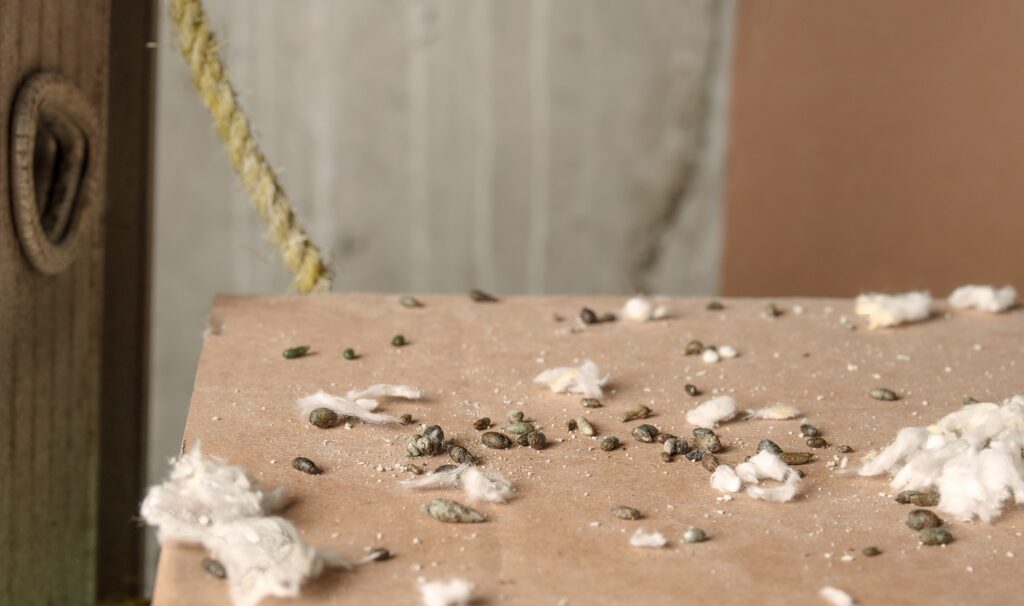
You walk into your basement or kitchen and spot small, dark specks along the floor. It might be near baseboards, behind refrigerators, or inside kitchen cabinets. At first, it is not clear what you are looking at. Many homeowners in Edmond run into this same problem.
Pest droppings are often the first sign of pest activity. The challenge is figuring out what kind of pest left them behind. Knowing how to tell mouse droppings vs. roach droppings helps you act faster and choose the right pest control approach. This guide explains the key differences, other signs to look for, and what to do next to keep your home pest-free.
Key Takeaways
Mouse droppings vs. roach droppings
Droppings are often the first sign of a pest. The shape and size tell you which one you have.
- Mouse droppings and roach droppings differ in size and shape, and telling them apart helps you understand which pest you are dealing with so you can respond appropriately.
- Where you find droppings in your home can narrow down the source, since mice and roaches tend to leave waste in different patterns and locations.
- Droppings from either pest may pose health concerns for your household, making correct identification an important first step.
- A professional inspection can confirm which pest is present when droppings alone are not enough to be certain.
How to Identify Mouse Droppings vs. Roach Droppings
Telling mouse droppings apart from roach droppings matters because each points to a different pest and a different response. The comparison is straightforward once you know what to look for, though droppings alone may not confirm the full picture. A quick visual check can help you decide what steps to take next.
How to Tell Mouse Droppings vs. Roach Droppings Apart
Understanding the key differences between mouse poop and roach poop starts with close observation. Small details in shape, texture, and location can point you in the right direction. This is often the first step in pest identification.
Mouse droppings are smooth and shaped like a grain of rice. They usually have pointed ends and are less than a quarter inch long. They are small, dark pellets that differ noticeably in size and shape from the pepper-like specks left by cockroaches. Roach droppings are much smaller than mouse droppings, often about half the size of a grain of rice. Feces of smaller roaches look like tiny seeds or specks of dirt.
Roach droppings also tend to stick to surfaces where cockroaches congregate, giving them a crushed-pepper appearance. Mouse droppings, by contrast, are pellet-shaped rather than speck-like, making them visually distinct from roach droppings that stick to surfaces. If you are unsure what you are seeing, a good flashlight is essential for spotting cockroaches and their signs.
Mouse Droppings vs. Roach Droppings: Key Differences
| Feature | Mouse Droppings | Cockroach Droppings |
| Shape | Smooth and shaped like a grain of rice | Tiny specks, seed-like pellets, or coffee ground-like particles |
| Size | Usually less than 1/4 inch long | Much smaller than mouse droppings, often about half the size of a grain of rice |
| Ends | Pointed ends | Blunt or irregular shapes |
| Texture | Firm, smooth, and solid | Uneven and grainy |
| Appearance | May contain small hairs from grooming | Often resemble black pepper or coffee grounds |
| Color | Dark brown or black when fresh | Dark brown or black when fresh |
| Smear Marks | Typically dry and separate | May leave smear marks in humid areas |
| Common Locations | Cabinets, pantries, attics, garages, along walls | Under sinks, behind appliances, inside cabinets, near food or moisture sources |
How to Spot Mouse and Cockroach Activity Indoors
Both types of droppings tend to show up in areas where food is stored or prepared. For roach droppings, you should look for fecal specks and droppings under kitchen counters, behind kitchen drawers, and in the back of cabinets. These pepper-like marks may accumulate in corners and along edges where roaches travel.
Mouse droppings are usually found in similar kitchen areas, but also appear along baseboards, inside pantry shelves, and near any gap a mouse uses to move through your home. Spotting either type of dropping in your living space is worth investigating further.
Where Mouse Droppings vs. Roach Droppings Show Up
Inside the home, both pests favor warm, hidden spaces near food and moisture. Roach droppings often cluster on surfaces in tight gaps, sticking in place and building up over time. Mouse droppings may appear near walls, baseboards, and food storage areas.
Garages, utility closets, and storage areas can also hold droppings from either pest. Checking these spots with a flashlight helps you distinguish between the pepper-speck pattern of roaches and the pellet shape of mouse droppings.
Exterior Entry Points Mice and Roaches Use
Both mice and roaches enter homes through small openings. Gaps around doors, foundation cracks, and openings where utility lines pass through walls can serve as entry points for either pest. Droppings near these access areas can help you identify which pest is getting inside.
Finding roach specks stuck to surfaces near an exterior door frame points to roach traffic, while loose pellets along a foundation wall suggest mice. Knowing which droppings are present near entry points helps you understand the type of activity around your home.
Why Mouse and Roach Problems Develop
Both mice and cockroaches leave droppings in the same general areas of your home, which is one reason the two are so often confused. Understanding why each pest shows up in those spots helps you figure out which one you are actually dealing with and what to do next.
Outdoor Nesting Areas for Mice and Roaches
Mice and roaches both nest close to reliable food and water before moving indoors. Mice may shelter in overgrown vegetation, debris piles, or outbuildings near your home. Roaches can gather in leaf litter, mulch beds, and other damp outdoor areas. When outdoor conditions push them closer to your foundation, both pests begin leaving droppings along their travel paths.
Food and Shelter That Attract Mice and Roaches
Accessible food is the primary driver for both pests. Both mice and roaches gravitate toward kitchens because that is where food residue and moisture are most available. The closer the food source, the more concentrated the droppings become in a small area.
How Mice and Roaches Move Around Homes
As activity increases, droppings spread beyond the kitchen. Mice tend to follow walls and edges, depositing droppings along their regular runways. Roach fecal specks accumulate in sheltered spots where roaches rest during the day, including behind drawers and inside cabinets. Both patterns expand outward as the population grows.
Trails and Entry Points Mice and Roaches Use
Mice squeeze through small gaps in your foundation, around pipes, and near utility openings. Roaches use many of the same entry points, favoring gaps under doors and around plumbing. Both pests leave droppings along these travel routes, so checking under sinks, inside cupboards, and behind drawers can reveal which pest is active and where it is entering your home.
Risks From Mice and Roaches
Both mouse droppings and roach droppings pose real concerns for your home, but the types of risk differ. Understanding those differences helps you decide how urgently to respond and what kind of help you may need.
Health Risks Linked to Mouse and Roach Droppings
Cockroach feces, saliva, eggs, and shed cuticles left on surfaces contain compounds that are allergenic to humans, especially those with asthma or other respiratory conditions. These materials may trigger an asthma attack even after the roaches themselves are gone.
Mouse droppings bring a different set of concerns. Rodents can transmit diseases to people through contamination in the home.
Children face particular vulnerability. Children can suffer respiratory attacks from exposure to asthma triggers and allergens attributed to cockroach and rodent infestations. Homes with droppings from either pest deserve prompt attention.
Property Damage From Mouse and Roach Activity
Mouse activity tends to carry broader property consequences. Rodents can damage buildings and contaminate food. Droppings are often just one visible sign of gnawing, nesting, and structural wear happening behind walls or in attic spaces.
Roach droppings on their own are less likely to cause structural damage, but they signal an indoor population that can leave allergens across multiple surfaces over time.
Food Areas and Pest Droppings
Both pests are drawn to areas where food is accessible. Mouse droppings near food storage or prep areas point to contamination risk, since rodents can contaminate food directly. Roach droppings in the same areas add allergen buildup to anything those surfaces touch.
Research supports taking both seriously. Studies found a significant association between childhood asthma and high cockroach and mouse allergen levels in housing environments.
When to Look Closer at Mouse and Roach Activity
Finding either type of dropping in your home is reason to investigate further. A few pellets behind an appliance could point to a passing visitor or an established population. The distinction matters because ongoing activity means ongoing allergen and contamination exposure.
If you spot droppings but are unsure which pest left them, a closer look at shape, size, and location can help. However, appearance alone does not always give you the full picture, so a professional inspection may be the clearest next step.
Professional Pest Control for Mice and Roaches
Knowing whether you are dealing with mouse droppings or roach droppings shapes the entire control approach. Each pest leaves behind waste in different patterns and locations, and the treatment strategy for a cockroach infestation looks very different from a mouse control plan. A professional inspection helps confirm which pest is present so the right steps can be followed.
How to Reduce Attractants for Mice and Roaches
Whether droppings point to mice or cockroaches, reducing what draws them in is an important first step. Keep food sealed in sturdy containers and clean up crumbs and spills promptly. Moisture control also matters, since both pests seek water sources indoors.
For cockroach situations, pay close attention to areas where grease or food residue builds up. Cockroach droppings can appear as small dark specks in the same spots where the insects feed and shelter. Removing clutter near those areas limits harborage and makes follow-up treatments more practical.
Why Mouse and Roach Control Starts With Inspection
Droppings are one of the most reliable early signs of an infestation, but appearance alone does not always tell the full story. Cockroach droppings can look similar to those of other household pests, so according to the University of Kentucky, location and other signs of infestation usually help distinguish them.
Cockroaches seldom congregate on beds the way bed bugs do, which means where droppings appear is a useful clue. A trained service professional reviews the placement of droppings alongside other evidence to confirm which pest is responsible before recommending a treatment direction.
What to Expect During Professional Mouse Droppings Vs Roach Dropping Treatment
For a cockroach infestation, baits are a core part of professional treatment. According to Texas A&M AgriLife Extension, sprays are not nearly as effective as baits for addressing German cockroach infestations. Baits can be placed next to fecal specks and droppings of cockroaches, targeting the areas where activity is concentrated.
In moderate to heavy German cockroach infestations, as many as 12 to 15 bait stations may be needed in a standard-sized home. Mouse control typically involves a different set of tools, including traps and exclusion work to seal entry points. Your Brandley Pest Control service professional will tailor the approach based on what the inspection reveals.
What to Expect From a Mouse and Roach Control Plan
A thorough control plan accounts for the type of infestation, the level of activity, and the layout of your home. For cockroach issues, both identification and nonchemical approaches, such as sanitation, play a role alongside bait placement. According to the EPA, integrated methods that combine identification with targeted control steps are part of a sound cockroach management plan.
For mouse activity, the plan may focus on exclusion, trapping, and monitoring. Brandley Pest Control offers same-day scheduling so you can get an inspection underway quickly. Your service professional will walk you through the plan, explain what was found, and outline the next steps so you know what to expect at each stage.
Mouse Droppings vs. Roach Droppings: Bottom Line
Telling mouse droppings apart from roach droppings comes down to size, shape, and where you find them. Mouse droppings are noticeably larger, pellet-shaped, and pointed at the ends, while roach droppings tend to look like small dark specks. Both types of droppings can appear in kitchens, cabinets, and near food storage areas. Identifying which pest left the evidence helps you take the right next step.
If you keep finding mouse droppings or signs of a roach infestation, it is time to schedule a pest inspection. Ongoing pest activity often means there is a hidden problem that needs attention. Schedule a professional inspection to uncover the full scope of the issue.
Brandley Pest Control provides same-day scheduling, inspections, rodent control, and solutions for cockroach infestation problems. With the right pest control plan and follow-up care, you can reduce health risks, protect your property, and move toward a pest-free home or business.
Frequently Asked Questions
How can I tell the two apart at a glance?
Mouse droppings are typically the size of a grain of rice with tapered ends. Roach droppings are much smaller and often resemble ground pepper. Roach droppings are much smaller and often appear as pepper-like specks in the areas where roaches are active, while mouse droppings are larger, pellet-shaped, and pointed at the ends.
Where should I look for droppings in my home?
Both pests may leave droppings in similar locations, including kitchen counters, behind drawers, inside cabinets, and near food storage. Checking under sinks and along the back walls of cupboards with a good flashlight can help you spot signs early.
Could the droppings be from a different pest entirely?
Yes. Roach droppings can look similar to bed bug spotting at first glance. The location where you find them usually helps narrow it down, since roaches and bed bugs favor different areas of a home. A trained service professional can confirm what pest is present.
What should I do after I find droppings?
Start by noting where and how many droppings you see. Avoid sweeping them up dry, as disturbing pest waste can spread particles into the air. Cleaning the area with a damp paper towel and a mild disinfectant is a reasonable first step. Then contact a pest control professional to inspect the area and determine the scope of the problem.