
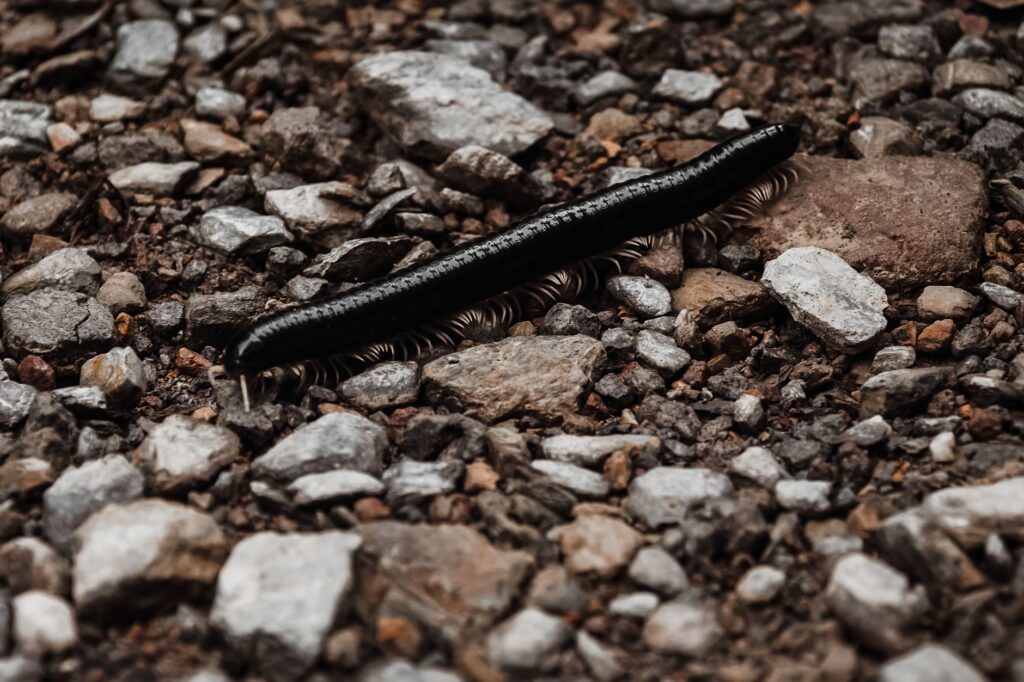
Centipedes in Oklahoma show up in basements, bathrooms, and crawl spaces, and their presence almost always signals the same two conditions: moisture and prey insects. Oklahoma State University confirms that centipedes are found in damp, dark areas under stones, leaf mulch, and logs, and indoors wherever other insects are present. Finding one or two is usually incidental. Finding them regularly means the conditions supporting them have not been addressed.
Key Takeaways
- Oklahoma’s most commonly encountered centipede indoors is the house centipede, 1 to 1.5 inches, grayish-yellow with three dark stripes, 15 pairs of banded legs.
- Centipedes found indoors are a reliable indicator of two underlying conditions: moisture and the prey insects they follow.
- The giant desert centipede is Oklahoma’s largest species, reaching over 6 inches. It is an outdoor species and poses a more serious bite risk than the house centipede.
The Centipedes Oklahoma Homeowners Actually Encounter
House centipede vs giant desert centipede
Oklahoma homeowners encounter two very different centipedes: a small, fast indoor hunter and a much larger outdoor species with a bite that actually hurts.
Oklahoma has several centipede species, but two account for the majority of homeowner encounters: the house centipede and the giant desert centipede. They differ significantly in size, habitat, and the practical concern they represent.
The House Centipede: Oklahoma’s Most Common Indoor Species
The house centipede (Scutigera coleoptrata) is the species most commonly found inside Oklahoma homes. The body runs 1 to 1.5 inches long, but 15 pairs of long, banded legs make it appear substantially larger and faster than it is. Oklahoma State University describes the coloring as grayish-yellow with three dark stripes running the full length of the back. The legs have alternating light and dark bands. When disturbed, house centipedes move in rapid, erratic bursts that are startling even when the animal itself is small.
House centipedes are found indoors year-round. They prefer damp portions of basements, closets, bathrooms, and unexcavated areas under the house. They feed on small insects, insect larvae, and spiders. A house centipede in a bathroom or basement is hunting prey in a humid environment. The concern is the conditions sustaining it, not the centipede itself.
The Giant Desert Centipede: Oklahoma’s Largest Species
The giant desert centipede (Scolopendra heros) is the largest centipede species in North America and confirmed present in Oklahoma. It reaches 6 inches or more in length, with a flat, segmented body that is typically reddish to orange-brown with a black head. It is primarily an outdoor species found under rocks, logs, and debris in drier areas, but it does enter structures occasionally.
The giant desert centipede delivers a significantly more painful bite than the house centipede. Its size and more powerful venom glands mean some individuals experience localized swelling and discomfort. Direct handling or accidental contact when reaching under rocks or debris is the typical bite scenario. Finding one indoors is unusual and almost always an accidental entry rather than evidence of an established indoor population.
How to Tell Centipedes From Millipedes
Oklahoma homeowners frequently confuse centipedes with millipedes, and the difference matters for understanding what each indicates. Centipedes are flattened with one pair of legs per body segment; millipedes are rounder with two pairs of legs per body segment and tend to move more slowly. Millipedes are primarily decomposers feeding on decaying vegetation; centipedes are active predators. Finding millipedes indoors typically indicates moisture and decaying organic matter near the foundation; finding centipedes indicates moisture plus a live prey insect population.
What Centipedes Indoors Actually Mean
A centipede found once in an Oklahoma basement is usually an incidental entry. Centipedes appearing in the same areas repeatedly, or in multiple rooms, mean the structure has moisture and prey insects actively sustaining them — the two conditions this section covers.
Moisture Is the First Condition
Centipedes require humidity to survive. Adult centipedes spend winter in secluded, moist areas and are consistently found in damp habitats. Indoor moisture that supports centipede activity typically comes from foundation seepage, plumbing leaks, poor ventilation in basements or crawl spaces, condensation on cool surfaces, or soil moisture migrating through block or poured walls. Reducing that moisture disrupts the habitat.
Prey Insects Are the Second Condition
House centipedes feed on small insects, insect larvae, and spiders. A centipede population in a basement or crawl space is sustained by a prey insect population in the same space. The centipede is the visible indicator of a less visible problem. Treating the centipede without addressing the prey insects produces short-term results only.
When Oklahoma Centipedes Are Most Active
Oklahoma’s warm, humid summers create conditions that support centipede activity from spring through fall outdoors. Indoors, house centipedes are active year-round wherever moisture and prey are present. Centipedes lay eggs in soil during spring and summer; adults overwinter in secluded, moist areas. Fall is when outdoor centipede species are most likely to enter structures seeking warmth, which corresponds with the seasonal movement of other fall-invading insects.
Some centipede species can live five to six years, which means an established indoor population can persist across multiple seasons if the underlying conditions are not addressed. The Oklahoma State University fact sheet on centipedes and millipedes covers life cycle and habitat in detail.
How to Reduce Centipede Activity in an Oklahoma Home
Addressing centipede pressure in an Oklahoma home requires working on both the moisture side and the prey insect side at the same time. Neither alone produces lasting results.
On the moisture side: run a dehumidifier in any below-grade space that stays damp through summer, repair active plumbing leaks, improve drainage away from the foundation, and check that crawl space vents are functioning. Leaf litter and wood debris stacked against the foundation hold moisture and provide harborage for both centipedes and their prey.
On the insect side: sealing entry points along the foundation perimeter, particularly around pipe penetrations, window frames, and utility entries, reduces the flow of prey insects that centipedes follow indoors. A foundation perimeter barrier treatment applied before fall entry season targets both prey insects and centipedes before they establish inside.
When to Call Brandley Pest Control
Call us when centipedes are appearing regularly in the same areas of the home, when sightings have increased over multiple seasons, or when you want both the centipede activity and the underlying moisture and prey insect conditions assessed at the same time. Treating the centipede without addressing what is sustaining it produces temporary results.
Professional service makes sense when:
- You are seeing centipedes repeatedly in the basement, bathroom, or crawl space.
- Centipede sightings have increased across more than one season.
- You have already tried moisture reduction but the activity continues.
- You want a foundation perimeter treatment applied before fall entry season peaks.
- You found a giant desert centipede indoors and want the entry point identified.
- You want the prey insect population assessed alongside the centipede activity.
Centipedes are covered under Brandley’s standard Pest Maintenance Plan alongside cockroaches, crickets, spiders, earwigs, silverfish, ants, millipedes, scorpions, beetles, pillbugs, and wasps. The plan includes interior and exterior crack-and-crevice treatment and de-webbing, which removes spider webs that indicate the prey population centipedes depend on. For homes with crawl spaces or attics where moisture-loving pests may gather out of sight, crawl space and attic dusting is available as an add-on. Because centipedes follow the same prey species covered under the plan, ongoing service reduces the food sources that keep centipedes returning rather than simply treating the visible pest.
Brandley Pest Control’s centipede control services address both the centipede activity and the moisture and insect conditions supporting it across the Oklahoma City metro.
Schedule a Centipede Inspection in Oklahoma City
If centipedes are appearing regularly in your home and you want to know what conditions are supporting them, we can inspect the property, assess moisture levels and prey insect activity, and recommend a treatment approach that addresses the source rather than just the symptom.
Contact Brandley Pest Control or call 405-987-4186 to schedule an inspection. Same-day service is available for customers who call before 3 PM.
Frequently Asked Questions
Are centipedes in Oklahoma dangerous?
House centipedes can technically bite but are considered harmless to people. The bite is uncommon and causes only minor, temporary irritation. The giant desert centipede is a different matter: its bite is more painful and can cause localized swelling. Direct handling of either species should be avoided, but neither poses a serious health risk to healthy adults.
What does it mean if I keep finding centipedes in my basement?
Repeated house centipede sightings in an Oklahoma basement indicate two conditions: enough moisture to make the space hospitable and enough prey insects to sustain the centipedes. The centipede is the visible indicator of a less visible problem. Addressing the moisture and the prey insect population is more effective than treating the centipede alone.
How do I tell a centipede from a millipede in Oklahoma?
Centipedes have one pair of legs per body segment, are flattened, and move quickly. Millipedes have two pairs of legs per body segment, are more rounded, and move slowly. Both are arthropods found in moist habitats. Centipedes are active predators hunting insects; millipedes feed on decaying vegetation. Finding centipedes indoors suggests a live prey insect population is present.
When are centipedes most likely to enter Oklahoma homes?
Outdoor centipede species enter structures most frequently in fall as temperatures drop and they seek protected overwintering sites. House centipedes are active year-round indoors wherever moisture and prey are present, so their activity is less seasonal and more tied to indoor conditions than to time of year.