
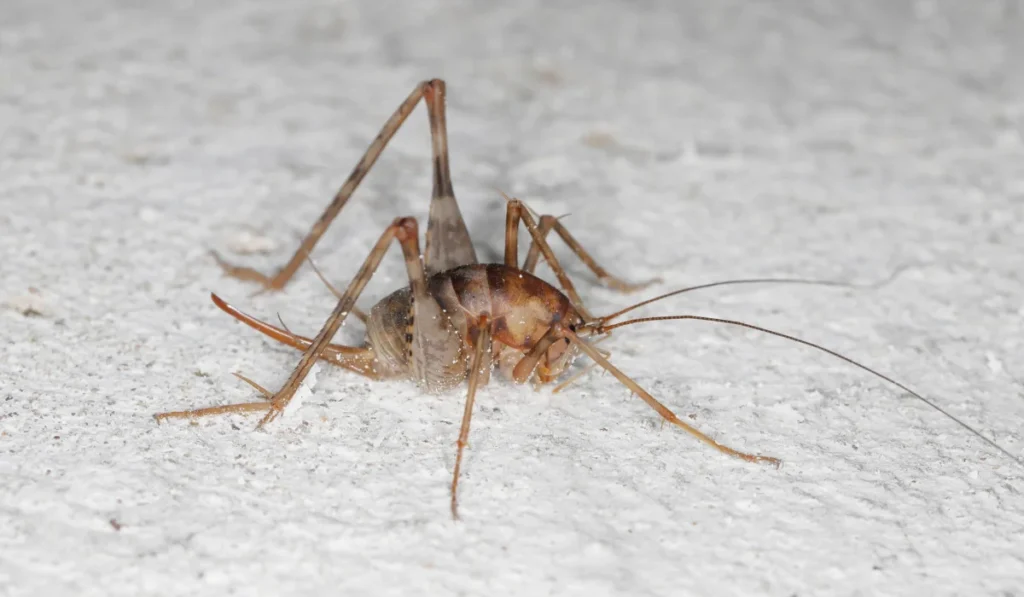
You switch on the basement light and catch a long-legged insect jumping behind a storage box. Its curved back resembles a camel’s hump, but its oversized legs make it look more like a spider. For many homeowners, this is the first sign of camel crickets in Oklahoma moving into the house as fall approaches.
Camel crickets favor cool, dark, damp spaces. Basements, crawl spaces, garages, laundry rooms, and utility areas often provide the shelter and moisture they need. They can enter through foundation cracks, worn door seals, basement windows, and small gaps around pipes or utility lines.
One camel cricket does not always signal a serious indoor problem. Regular sightings, however, can point to high humidity, drainage trouble, nearby outdoor hiding places, or openings around the foundation. Correcting those conditions is the best way to keep these silent crickets from becoming seasonal visitors.
What Camel Crickets in Oklahoma Look Like
Camel crickets have a rounded, humpbacked body, long antennae, and powerful rear legs. Most are tan or brown, which helps them blend into soil, wood, leaves, and dim corners. They are also called cave crickets, spider crickets, and basement crickets.
Unlike field crickets and house crickets, adult camel crickets do not have wings and do not chirp. According to NC State’s camel cricket guidance, they often live outdoors beneath logs, stones, firewood, and other damp cover. Indoors, they favor basements, crawl spaces, garages, bathrooms, and storage rooms.
Camel Crickets Compared With Other Common Crickets
Homeowners often use the word “cricket” for several insects that behave differently. Identifying the type matters because the conditions attracting a camel cricket are not always the same as those drawing field crickets toward a porch light.
| Feature | Camel Cricket | Field Cricket | House Cricket |
|---|---|---|---|
| Body shape | Arched or humpbacked | Flatter and thicker | Slender and flatter |
| Typical color | Tan to brown | Dark brown or black | Yellowish brown |
| Wings | Absent in adults | Present | Present |
| Sound | Silent | Chirps | Chirps |
| Common indoor location | Basements and crawl spaces | Near doors, garages, and lights | Warm indoor areas |
| Main attraction | Moisture, darkness, and shelter | Outdoor lighting and access | Warmth, food, and shelter |
Camel crickets often jump when startled. Their movement can be unpredictable, especially in a dark room, so they may appear to jump toward someone standing nearby. They are reacting to light, vibration, and movement rather than chasing or attacking people.
Why Camel Crickets Love Oklahoma Basements in Fall
Camel crickets in Oklahoma often become more noticeable from late summer into fall. Outdoor temperature and moisture conditions begin to change, disturbing the protected areas where the insects have spent warmer months. A basement or crawl space offers a more stable environment with fewer disturbances.
The University of Minnesota’s guidance on crickets notes that crickets commonly enter homes during late summer and fall. NC State Extension also reports that camel cricket problems can increase during weather extremes, including heavy rainfall and extended periods of hot, dry weather. Either condition can reduce suitable shelter outdoors and encourage movement toward buildings.
Fall weather alone does not create a camel cricket problem. The home must also offer the moisture, shelter, and access the insects need. That is why one property may experience repeated activity while another home in the same neighborhood sees few or no camel crickets.
Basements Offer Moisture and Stable Shelter
A basement does not need puddles or visible water damage to attract camel crickets. Condensation on plumbing, a slow leak beneath a utility sink, damp concrete, or elevated basement humidity may provide enough moisture. Laundry equipment, water heaters, floor drains, and poorly sealed basement windows can create favorable conditions within a small area.
Darkness and clutter make those spaces even more suitable. Cardboard boxes, stored fabrics, shelving, exposed insulation, and gaps along foundation walls give camel crickets places to hide during the day. In homes around Yukon, Mustang, Piedmont, Edmond, and Northwest Oklahoma City, unfinished lower levels can remain cooler and less disturbed than the main living area.
Camel crickets may stay hidden until someone moves a box, turns on a light, or enters a storage room. This behavior can make the problem appear sudden even when the insects have occupied the space for days or weeks.
Outdoor Hiding Places Increase Indoor Pressure
Many camel cricket problems begin outside the house. Leaf piles, deep mulch, stacked firewood, landscaping stones, boards, dense plants, and stored equipment can trap moisture and provide cover near the foundation.
When these materials sit beside a basement window, crawl-space entrance, or utility opening, camel crickets have a short path indoors. Cleaning the basement without changing the exterior conditions may remove the insects you see while leaving a steady source of new activity outside.
How Camel Crickets Enter Oklahoma Homes
Camel crickets can squeeze through small structural openings. Common entry points include foundation cracks, gaps beneath exterior doors, loose basement window frames, damaged screens, crawl-space access doors, and spaces around plumbing or wiring.
Garage doors also deserve attention. Worn seals, uneven concrete, and gaps near the corners can allow insects to move inside. Once they enter the garage, camel crickets can hide beneath shelving, behind appliances, or inside stored belongings before moving deeper into the home.
Repeated Sightings Can Reveal Maintenance Problems
The location of each sighting can help narrow down the entry route. Crickets that repeatedly appear beside a water heater may be entering around plumbing lines. Activity near one basement window may point to a damaged screen, damp window well, or poorly sealed frame.
Moisture patterns can also reveal the source. Dampness along one foundation wall may indicate that water is collecting near the exterior. Crickets appearing after rainfall may be moving away from saturated soil or wet landscape materials.
Seal openings after repairing active leaks and drainage concerns. Covering a crack without addressing the moisture around it may hide the symptom while allowing the underlying problem to continue.
Are Camel Crickets Dangerous or Destructive?
Camel crickets are mainly nuisance pests. They do not sting, and they do not cause the type of structural damage associated with termites or other wood-destroying insects. Their appearance and sudden jumping are often more troubling than the insects themselves.
Persistent activity can still create practical concerns. Camel crickets may leave dark fecal marks where they gather. When food is limited, they can feed on paper, cardboard, fabrics, and other organic materials stored in damp spaces. Clothing, documents, and boxes placed directly on a basement floor may be more exposed.
The Conditions Behind the Activity Matter
Regular camel cricket sightings can signal excess moisture or openings that may also attract other pests. A damp basement can damage stored belongings and become harder to maintain when leaks, condensation, and poor drainage remain uncorrected.
A peer-reviewed study available through the National Library of Medicine’s camel cricket research archive found that household sightings can be associated with larger populations living around residential properties. The practical lesson is simple: removing the camel crickets inside may not end the problem when outdoor habitat remains close to the foundation.
How to Get Rid of Camel Crickets
Start by removing visible insects with a vacuum. This provides immediate relief without driving them into another part of the room. Empty the vacuum outside after use.
Place sticky monitors along walls to identify travel routes and areas with repeated activity. Useful locations include basement windows, utility rooms, garage edges, crawl-space doors, plumbing penetrations, and the corners of storage areas. These monitors help show where crickets are moving, but they should not replace moisture correction and exclusion.
Reduce Basement Moisture
Inspect plumbing connections, water heaters, laundry equipment, floor drains, window wells, and foundation walls. Look for leaks, condensation, water stains, or damp building materials. Correct active water problems before focusing on surface treatments.
A dehumidifier can help lower basement humidity, especially in a room with limited airflow. It will not repair a leaking pipe, redirect water away from the foundation, or seal an entry point. Empty or drain the unit as directed and monitor whether humidity improves over time.
Keep boxes and stored belongings off damp floors. Sealed plastic containers offer better protection than cardboard in areas prone to moisture. Leave enough space along foundation walls to inspect for insects, leaks, and new cracks.
Remove Outdoor Shelter
Move firewood, lumber, landscape materials, and stored equipment away from the foundation. Clear heavy leaf buildup and trim dense plants that hold moisture beside the house.
Avoid piling mulch directly against the foundation. A clear, visible edge makes the area less suitable for camel crickets and makes structural gaps easier to spot. Check beneath decks, steps, and outdoor storage areas where shade and moisture may create hidden shelter.
Seal Common Entry Points
Inspect exterior doors, garage seals, basement windows, vents, utility lines, and crawl-space access points. Replace damaged weather stripping and door sweeps. Repair screens and seal accessible gaps around pipes, cables, and window frames after resolving moisture concerns.
Focus first on openings near known activity. A complete inspection is more effective than applying caulk randomly because it connects the indoor sightings with the outdoor conditions supporting them.
When Professional Camel Cricket Control Makes Sense
A few isolated crickets may stop appearing after you reduce humidity, clear outdoor shelter, and seal entry points. Professional service may be the better choice when sightings continue, several rooms are affected, the crawl space is difficult to inspect, or the source remains unclear.
Brandley Pest Control starts with a careful property inspection. A licensed applicator checks where camel crickets are active, how they may be entering, and which conditions are supporting them. The recommended treatment can then focus on the affected interior spaces, exterior foundation, and nearby hiding areas instead of relying on a one-size-fits-all application.
Follow-up service helps confirm whether activity is declining and whether moisture or access problems still need attention. Homeowners also receive practical prevention guidance based on the layout and condition of the property.
Keeping Camel Crickets Out of Your Oklahoma Basement
Camel crickets stay where moisture, shelter, and access overlap. Fall weather can increase their movement, but the condition of your basement, crawl space, garage, and foundation determines whether they remain indoors.
Removing visible crickets is only the first step. Long-term control comes from lowering humidity, repairing leaks, clearing damp outdoor cover, and closing the openings the insects use. Those changes make the property less attractive while reducing the chance of another wave of crickets appearing after the weather shifts.
When camel crickets in Oklahoma keep returning, Brandley Pest Control can inspect your home and recommend a treatment plan based on the source of the activity. Homeowners in Yukon, Mustang, Piedmont, Edmond, Northwest Oklahoma City, and nearby communities can contact the Brandley team for a free inspection and clear guidance on the next step.