
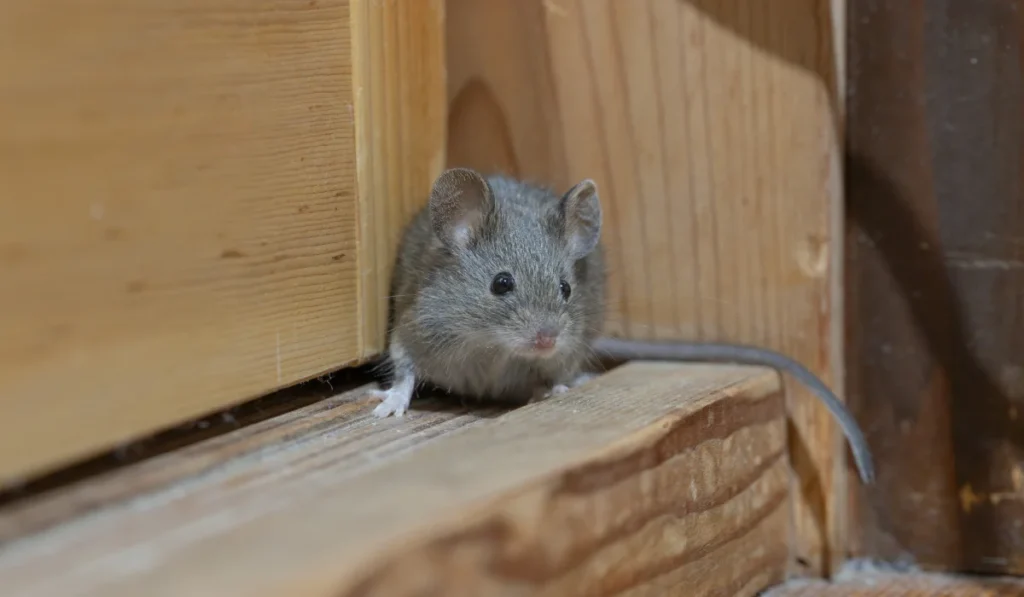
A scratching sound behind the pantry wall can be easy to dismiss at first. When it returns after dark, you may be hearing a mouse moving between a nesting area and a food source. Cooler nights often bring this problem to the attention of homeowners across Yukon, Mustang, Piedmont, Edmond, and Northwest Oklahoma City.
Finding field mice in the house does not mean your home is poorly maintained. Mice need only a small opening, a sheltered space, and access to food or nesting material. A worn garage door seal, an opening around a utility line, or a narrow foundation gap can provide a usable path indoors.
Taking action early can keep a minor issue from spreading into attics, crawl spaces, cabinets, and wall voids. The right response starts with understanding why mice move indoors, how they enter, which signs deserve attention, and how exclusion and monitoring work together.
Why Field Mice Head Indoors as Nights Turn Cool
Field mice in the house often become more noticeable as nighttime temperatures fall. Outdoor food and shelter conditions shift with the season, while garages, attics, crawl spaces, and wall voids offer dry, protected places to rest and nest. Once a mouse finds a dependable route inside, it may remain close to stored food, pet supplies, cardboard, paper, or insulation.
Cool weather is only part of the picture. Mice are more likely to stay when a home provides easy access to food and concealed spaces. Properties near open fields, wooded lots, drainage areas, and undeveloped land may place outdoor mouse habitat close to garages and foundations. Thick vegetation, stacked firewood, and stored materials near exterior walls can also provide cover as mice approach the structure.
Mice are generally more active after the home grows quiet. You may hear scratching, rustling, or light chewing late at night before you see a mouse. In other cases, the first clue appears the next morning as droppings near a pantry, torn food packaging, or shredded material in a storage area.
Field Mice in the House or a House Mouse?
“Field mouse” is a general term homeowners use for small mice that usually live outdoors. It may refer to a deer mouse or another outdoor species rather than one specific type of mouse. A house mouse, by comparison, is closely associated with buildings and can live indoors throughout the year.
A quick sighting may not provide enough detail for certain identification. Outdoor mice often have brown coloring with a lighter underside, while house mice usually appear gray-brown. Some deer mice have a more distinct contrast between their upper and lower coloring, but lighting, distance, and movement can make those features difficult to see.
| Feature | Outdoor or “Field” Mouse | House Mouse |
|---|---|---|
| General appearance | Often brown above with a lighter underside | Usually gray-brown with less contrast |
| Typical habitat | Fields, brush, wooded edges, and areas near structures | Homes, garages, sheds, and other buildings |
| Indoor activity | May enter when shelter or food conditions change | Can remain indoors during any season |
| Common hiding areas | Garages, attics, crawl spaces, and stored materials | Kitchens, cabinets, wall voids, and utility areas |
You do not need to identify the exact species before taking basic preventive steps. Removing food access, inspecting the exterior, and monitoring where signs appear can help with either type. Professional identification becomes more useful when activity continues or mice are nesting in several parts of the structure.
How Field Mice Get Into the House
A mouse does not need an obvious hole to enter a building. According to Oklahoma State University guidance on house mice, mice can pass through openings smaller than the width of a dime. Gaps close to one-quarter inch deserve attention during an exterior inspection.
Ground-Level Entry Points
Garage doors are common access points because the lower corners do not always sit tightly against the frame. Damaged weatherstripping, worn door sweeps, and uneven concrete may leave enough space for a mouse to enter. Once inside the garage, it can move behind appliances, stored boxes, cabinets, or interior walls.
Exterior doors can create similar openings. Check the threshold, lower corners, and spaces around the frame while the door is closed. Foundation cracks, crawl-space doors, siding gaps, and openings around plumbing or electrical lines should also be inspected. Pay close attention to places where two building materials meet, since those joints can shift or separate over time.
Roofline and Utility Openings
Some mice reach attics through damaged vents, roofline gaps, or openings near soffits. Nearby branches, fences, utility lines, and attached structures may help them reach areas above ground level. Dryer vents and air-conditioning lines can also leave gaps where they pass through an exterior wall.
Walk around the home slowly rather than checking only visible doors and windows. Shrubs, outdoor equipment, utility boxes, and stored materials can hide small openings. An inspection is more useful when it follows the full perimeter and includes the garage, crawl space, attic access, and utility areas.
Signs Field Mice Are Already Inside
Signs of mice in the house often appear along walls and other protected edges. Mice tend to travel beside cabinets, shelving, baseboards, and stored items instead of crossing open rooms. Droppings may collect under sinks, behind appliances, inside cabinets, or along garage walls.
Droppings, Gnawing, and Nesting Material
Mouse droppings are small, dark, and shaped somewhat like grains of rice. Fresh droppings may appear darker, while older material becomes dry and dull. A single finding does not reveal how many mice are present, but new droppings appearing after cleanup suggest continued activity.
Gnaw marks are another common clue. Look for damage to cardboard, plastic food packaging, wood, and stored bags of pet food or birdseed. Mice may use shredded paper, fabric, cardboard, or insulation for nesting. These materials often collect in drawers, boxes, attic corners, garage cabinets, or other quiet spaces.
Nighttime Sounds and Odors
Scratching in the walls may come from a mouse moving through a wall void or ceiling space. Light tapping, chewing, or rustling may also become noticeable after dark. Sound can travel through framing, so the place where you hear activity may not be the exact location of the mouse.
A persistent musky odor can develop near nesting or travel areas, especially in enclosed spaces with limited airflow. When droppings, gnawing, sounds, and odors appear in more than one part of the home, a wider inspection can help identify the main travel routes and entry points.
How to Keep Field Mice Out of Your House This Fall
Keeping field mice out of your house requires more than placing a trap where you saw one mouse. A complete response addresses the opening that allowed entry, the conditions encouraging mice to stay, and any active mice already inside. Trapping alone may reduce visible activity without preventing another mouse from using the same route.
Seal Accessible Openings
Inspect garage door corners, exterior doors, foundation joints, siding gaps, crawl-space access points, vents, and utility penetrations. Replace worn door sweeps and repair weatherstripping that no longer creates a tight seal. Materials used for exclusion should fit the opening and the surrounding surface rather than relying on a soft filler that mice can damage.
The EPA’s guidance for identifying and preventing rodent infestations recommends sealing openings and reducing shelter close to buildings. Leaf piles, thick ground cover, deep mulch, clutter, and stacked materials near the foundation can conceal mouse activity and make small gaps harder to spot.
Reduce Food and Nesting Opportunities
Store pet food, birdseed, grass seed, and pantry goods in durable containers with secure lids. Clean crumbs and spills around appliances, shelves, and feeding areas. Garbage containers should close tightly, especially when kept in a garage or near an exterior wall.
Reducing clutter also makes early mouse activity easier to identify. Cardboard boxes, paper bags, loose fabric, and other stored materials can provide concealed nesting areas. Raising items off the floor and keeping wall edges visible makes it easier to find droppings, gnawing, or damaged packaging.
Place Traps Along Travel Routes
Snap traps can help address mice already inside when placed along protected travel paths. Mice often move beside walls, so traps are generally more useful near room edges, cabinets, appliances, and other areas where signs appear. Keep all traps where children and pets cannot reach them, and inspect them regularly.
Ultrasonic devices should not replace exclusion, sanitation, and monitoring. Oklahoma State University Extension reports little evidence that sound, magnetic, or vibration devices remove established mice from buildings. Closing access points and reducing food and shelter remain the more practical foundation for fall mouse prevention.
How to Clean Mouse Droppings Safely
Mouse droppings should not be treated like ordinary household dust. Sweeping or vacuuming dry material can stir contaminated particles into the air. Wet cleanup helps keep the material contained while it is removed.
The CDC’s instructions for cleaning up after rodents recommend wearing gloves and thoroughly wetting droppings and the surrounding area with disinfectant. Allow the surface to remain wet for the contact time listed on the product, then wipe up the material with paper towels.
Place the waste in a sealed bag, clean the surrounding surface, and wash your hands after removing the gloves. Heavy contamination, large nests, or waste inside ventilation systems may require professional assessment rather than routine household cleanup.
When Professional Mouse Control Makes Sense
Professional mouse control may be appropriate when new droppings continue to appear, sounds come from walls or ceilings, or several rooms show signs of activity. It can also help when likely entry points are located on a roofline, inside a crawl space, or behind equipment that is difficult to inspect safely.
A thorough service should look beyond the mouse you happened to see. The inspection needs to identify travel routes, nesting areas, food sources, and exterior openings. Those findings can then guide trap placement, exclusion work, sanitation recommendations, and follow-up monitoring.
Brandley Pest Control begins with a detailed assessment of your property. Licensed applicators inspect likely activity areas and potential entry points, explain what they find, and recommend a plan based on your home. Follow-up visits help monitor the results and identify any adjustments needed for continued protection.
Keep Field Mice Outside Your Oklahoma Home
Field mice in the house become easier to manage when you address the full problem instead of one isolated sign. Sealing entry points, protecting stored food, reducing nesting material, placing traps correctly, and cleaning droppings safely each serve a different purpose.
Cool nights may encourage mice to look for shelter, but they still need a way inside. A careful inspection often connects nighttime noises or pantry droppings to the overlooked opening that allowed the activity to begin.
Homeowners in Yukon, Mustang, Piedmont, Edmond, and Northwest Oklahoma City can learn more about the local, family-owned team at Brandley Pest Control. When you are ready for a property assessment and a mouse control plan built around your home, contact Brandley Pest Control to schedule service.