
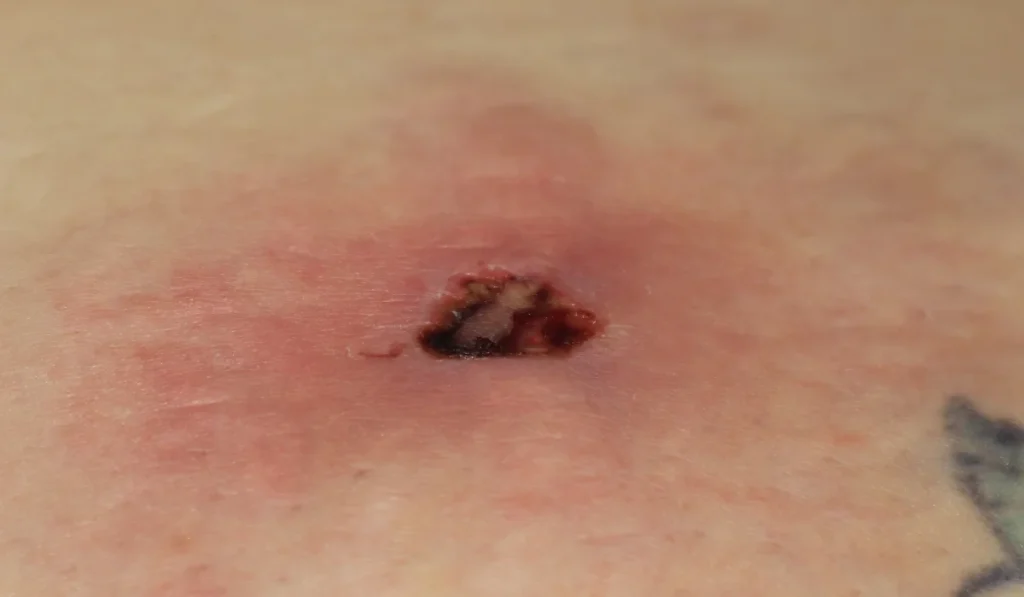
A brown recluse bite may look minor at first. You might not feel the bite when it happens, but burning, tenderness, redness, or discoloration can develop several hours later. Brown recluse bite progression varies, so an unexplained sore should never be diagnosed from appearance alone.
Some reactions remain mild and begin improving within a few days. Others develop a blister, darkened skin, or an open wound that takes weeks to heal. Knowing the general brown recluse bite stages can help you track changes and recognize when medical care is needed.
Brown recluse spiders are established in Oklahoma and often hide in quiet areas where stored belongings remain undisturbed. Homeowners in Yukon, Mustang, Piedmont, Edmond, and Northwest Oklahoma City may encounter them in closets, attics, garages, basements, boxes, clothing, furniture, rock piles, and leaf piles.
Why Brown Recluse Bite Symptoms Are Hard to Identify
Brown recluse bite symptoms differ from one person to another. The amount of venom, the location of the bite, and the person’s response can affect the level of pain and skin damage. One person may develop mild redness and tenderness, while another may experience blistering, bruised-looking discoloration, or tissue breakdown.
Doctors may have difficulty confirming the cause unless someone saw the bite occur and the spider was collected or photographed clearly enough for reliable identification. No routine medical test can prove that a particular skin lesion came from a brown recluse. Bacterial infections, other arthropod bites, and certain inflammatory skin conditions can produce similar pain, swelling, redness, and open sores.
The shape of the wound can offer clues, but it is not a diagnosis. Several separate sores, a raised center filled with pus, an ulcer that opens almost immediately, or a wound that continues for months may point to another cause. If the area is worsening, a healthcare provider should evaluate it instead of relying on brown recluse bite pictures found online.
Brown Recluse Bite Stages From the First Hours Through Healing
Brown recluse bite stages provide a useful framework, but they are not a schedule every wound will follow. Many bites remain limited to temporary discomfort and redness. More serious reactions may continue changing for several days before the full extent of the injury becomes clear.
Track the wound’s size, color, pain, swelling, and drainage. Taking a clear photograph in consistent lighting once or twice a day can help you document changes for a healthcare provider. Do not wait for the wound to match a particular stage before seeking care if symptoms are severe or progressing quickly.
The First Eight Hours
The bite itself is often painless or feels like a mild sting. During the next several hours, the site may begin to itch, burn, or feel tender. Redness can appear around the area, while the center may become pale, blue, or purple.
A small bump or blister can form within the first six to 12 hours. These symptoms can also occur with other bites and skin problems, so they do not confirm that a brown recluse was responsible. Oklahoma State University’s brown recluse guide describes early burning followed by possible blister formation and darkening of the surrounding tissue.
Days One Through Three
During the first few days, pain and tenderness may increase. Some wounds develop a pale center surrounded by red or bruised-looking skin. Others remain small, stop changing, and begin healing without ever forming an open sore.
This is also when an infection can resemble a suspected spider bite. Increasing warmth, pus, rapidly spreading redness, or several similar lesions may suggest a bacterial skin infection or another condition. Medical evaluation becomes more useful as the wound changes because a clinician can assess the complete pattern rather than a single photograph.
Days Four Through 14
A more serious local reaction may darken as damaged tissue breaks down. A blister can open, and the center may become sunken or ulcerated. Dead tissue can dry into a dark covering called an eschar.
This process is known as necrosis, but it does not occur after every brown recluse bite. When tissue loss develops, the open wound usually appears after several days rather than immediately. A sore that produces pus early, becomes sharply raised, or appears alongside multiple wounds does not fit the typical progression and deserves a closer medical assessment.
The Following Weeks
Mild bites may heal within days or a few weeks. Deeper ulcers take longer because the body must replace damaged tissue beneath the surface. A wound may also leave a scar, especially when tissue loss extends into deeper layers of skin.
An Oklahoma primary-care study of suspected brown recluse bites followed 189 patients with available outcomes. The median healing time was 17 days, and clinicians recorded permanent scarring in 21 percent of cases. Because the study involved suspected bites rather than spider-confirmed bites in every patient, those figures describe the study group and cannot predict how every wound will heal.
When a Brown Recluse Bite Needs Medical Care
A suspected bite should be checked promptly if pain continues to increase, the wound is getting larger, or red, purple, or brown discoloration is spreading. Blistering, an open ulcer, drainage, increasing warmth, or worsening swelling also call for medical attention. Early evaluation matters because skin infections and other conditions may need treatment that has nothing to do with spider venom.
Some symptoms involve more than the skin. Fever, chills, nausea, marked weakness, yellowing of the skin or eyes, dark urine, or reduced urination may signal a body-wide reaction. This type of reaction is sometimes called systemic loxoscelism and requires urgent medical assessment.
| Level of Care | Signs to Watch For | Recommended Action |
|---|---|---|
| Monitor closely | Mild redness, tenderness, or itching that is not spreading | Wash the area, apply a cold compress, and document changes |
| Seek prompt medical care | Increasing pain, spreading discoloration, blistering, drainage, warmth, swelling, or an enlarging wound | Contact a healthcare provider for an examination |
| Seek emergency care | Trouble breathing or swallowing, fainting, confusion, seizures, repeated vomiting, severe weakness, dark urine, or rapidly increasing swelling | Call 911 or go to an emergency department |
Children, older adults, and people with significant health conditions may need care sooner because symptoms can be harder to monitor or manage at home. When you are uncertain about the severity of the reaction, contacting a medical professional is safer than waiting for the wound to become more obvious.
Brown Recluse Bite First Aid and Medical Treatment
Wash the area gently with mild soap and water. Apply a cold compress wrapped in cloth for short periods, and elevate the affected arm or leg when practical. Avoid scratching or picking at a blister because broken skin can increase the risk of infection.
Do not cut the wound, squeeze it, apply heat, or attempt to remove venom by suction. If the spider is still nearby, take a photograph from a safe distance. Collect it only when you can do so without touching it or risking another bite.
According to Poison Control’s brown recluse bite guidance, no specific antidote is routinely available in the United States. Treatment focuses on the wound and the person’s symptoms. A clinician may recommend pain relief, wound care, a tetanus vaccination review, or laboratory testing when signs point to a body-wide reaction.
Antibiotics treat bacterial infections, not brown recluse venom. They should be used when a healthcare provider finds evidence of infection rather than as an automatic treatment for every suspected bite. Deep or infected wounds may need specialized wound care, but decisions about procedures should come from the treating medical team.
Poison Control can provide case-specific guidance at 1-800-222-1222. Call 911 for trouble breathing, loss of consciousness, seizures, or another medical emergency.
How to Reduce Brown Recluse Activity Around Your Oklahoma Home
Brown recluse spiders prefer sheltered spaces where they are unlikely to be disturbed. Shake out stored shoes, gloves, clothing, towels, and bedding before using them. Wear gloves when moving firewood, cardboard boxes, or items stored in garages, sheds, attics, and closets.
Reducing clutter removes some of the cracks and tight spaces where spiders hide. Sealed plastic containers offer better protection than open or damaged cardboard boxes. You can also seal accessible gaps around baseboards, doors, windows, utility openings, and storage areas.
Monitoring traps placed along walls in quiet rooms can help locate areas with spider activity. Finding one spider does not show how many are present or where they are entering, so a thorough inspection should look beyond the spot where the spider was seen. Addressing other insects around the property can also reduce the prey spiders rely on.
Getting the Right Help for a Suspected Brown Recluse Bite
A medical professional should evaluate a changing wound, while a pest control professional should address spider activity in the home. Keeping those roles separate protects your health and helps solve the property conditions that may lead to future encounters.
Brandley Pest Control serves homeowners across the Oklahoma City metro with thorough inspections, clear explanations, and treatment recommendations based on the conditions found at each property. A licensed applicator can inspect closets, garages, attics, storage areas, entry points, and other places where brown recluse spiders may shelter.
If you are seeing spiders, shed skins, or recurring activity in Yukon, Mustang, Piedmont, Edmond, or Northwest Oklahoma City, contact the Brandley Pest Control team to schedule an inspection. Identifying hiding areas and reducing favorable conditions can help protect your home from another brown recluse encounter.