
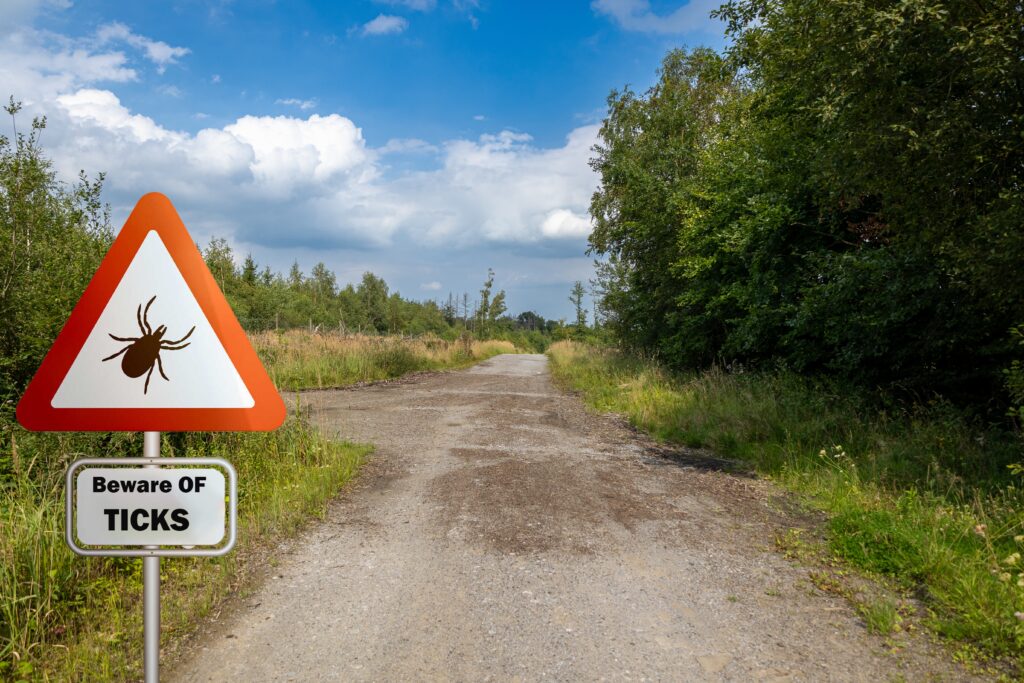
Oklahoma has four tick species that regularly bite people: the lone star tick, the American dog tick, the black-legged tick, and the brown dog tick. The lone star tick is the one most commonly encountered during outdoor activities in the state, and Oklahoma consistently ranks among the top states nationally for reported cases of Rocky Mountain spotted fever, which is transmitted by the American dog tick. Oklahoma’s mild winters mean tick activity rarely stops entirely, making year-round awareness more practical than seasonal-only precautions.
Key Takeaways
- The lone star tick is Oklahoma’s most commonly encountered tick. Its distinctive white spot on the female’s back and aggressive host-seeking behavior set it apart from the other three species.
- Tick season in Oklahoma runs roughly from early spring through late fall, with some species active through winter. Year-round vigilance is the practical approach given the state’s climate.
- Rocky Mountain spotted fever is the most serious tick-borne disease risk for Oklahoma residents. The American dog tick is its only known vector in the state.
The Four Oklahoma Ticks Most Likely to Bite You
Oklahoma has several tick species, but four account for the vast majority of human encounters. The OSU Extension fact sheet on common Oklahoma ticks covers each of these species in detail, and the differences between them matter for understanding both disease risk and seasonal timing.
Lone Star Tick: Oklahoma’s Most Common Human-Biting Tick
- Color: Reddish-brown; female has a single white spot on the dorsal shield
- Size: Adults about 1/4 inch; nymphs much smaller
- Active: Early spring through late fall
- Diseases: Ehrlichiosis, STARI, tularemia, Heartland virus; linked to alpha-gal syndrome
The lone star tick (Amblyomma americanum) is the tick most commonly encountered by people during outdoor activities in Oklahoma. The female is identifiable by a single white spot on the center of her reddish-brown dorsal shield, which is how the species got its name. Males have white markings around the posterior margin of the shield rather than a single spot. Both nymphal and adult stages actively seek out human hosts, and nymphs are small enough to go unnoticed.
The lone star tick is active from early spring through late fall, found in wooded areas, brush, tall grass, and shaded yards. Its range in Oklahoma is expanding westward. Lone star ticks actively pursue hosts rather than waiting on vegetation, which makes them the most frequently encountered tick species across the Oklahoma City metro and surrounding areas. They transmit human monocytic ehrlichiosis, southern tick-associated rash illness (STARI), tularemia, and Heartland virus, and are the primary tick associated with alpha-gal syndrome, a red meat allergy that develops in some people after repeated bites.
American Dog Tick: The RMSF Vector
- Color: Reddish-brown with white or yellowish mottled markings on the dorsal shield
- Size: Adults up to 1/4 inch before feeding; larger than lone star tick
- Active: Late spring through summer (peak)
- Diseases: Rocky Mountain spotted fever (only known vector in Oklahoma)
The American dog tick (Dermacentor variabilis) is the only known vector of Rocky Mountain spotted fever (RMSF) in Oklahoma, which makes correct identification important. It is larger than the lone star tick, with a reddish-brown body and distinctive white or yellowish mottled markings on the dorsal shield of both sexes. Adults can reach about a quarter inch in length before feeding.
The American dog tick is found statewide but is most abundant in wooded and partially wooded recreational areas. Adults are most active from late spring through summer. This species is more commonly picked up by walking through vegetation where ticks are questing than by direct pursuit. Oklahoma consistently ranks among the top states nationally for reported RMSF cases, a direct function of how widely distributed this species is across the state.
Black-Legged Tick: Fall and Winter Activity Window
- Color: Dark brown to black legs; reddish-brown body; no colorful markings
- Size: Smaller than lone star and American dog tick; nymphs very small
- Active: Adults late September through March/April; nymphs spring and summer
- Diseases: Lyme disease, anaplasmosis, babesiosis (low Lyme prevalence in Oklahoma specifically)
The black-legged tick (Ixodes scapularis), often called the deer tick, has a different seasonal pattern from the other Oklahoma species. Adults become active in late September and October and remain active through March or April, the cooler months when many people assume tick activity has stopped. The nymphal and larval stages are most active in spring and summer.
In Oklahoma, the black-legged tick is found primarily in wooded areas of eastern Oklahoma, though it also occurs in wooded areas elsewhere in the state. This tick is a vector of Lyme disease, anaplasmosis, and babesiosis in other parts of the country. Lyme disease has not been shown to have high prevalence in Oklahoma because larval black-legged ticks here typically feed on lizards rather than mice, which serve as the reservoir host for the Lyme disease bacteria in northeastern states where the disease is more common.
Brown Dog Tick: The Indoor Species
- Color: Uniform reddish-brown; no distinctive markings
- Size: Similar to lone star tick adults
- Active: Year-round indoors
- Diseases: Rocky Mountain spotted fever; canine monocytic ehrlichiosis
The brown dog tick (Rhipicephalus sanguineus) is the one tick species in Oklahoma capable of completing its entire life cycle indoors. It is reddish-brown and uniform in color with no distinctive markings. In Oklahoma, it is primarily a pest of dogs, but it will bite people and can establish infestations inside homes, kennels, and other structures when brought in on a dog.
Finding ticks on a dog repeatedly, or finding them in the home between the dog’s visits to a vet, points to a brown dog tick infestation rather than an outdoor exposure. The species transmits Rocky Mountain spotted fever and canine monocytic ehrlichiosis.
How to Reduce Tick Exposure Around Your Oklahoma Property
The practical steps for reducing tick pressure on a property address the habitat that supports ticks and the pathways that bring them close to the home. The most effective window for yard treatment and habitat reduction is late winter through early spring, before tick populations begin questing.
Ticks require a shaded, humid environment to survive off a host. Keeping lawns mowed short, removing leaf litter from the yard perimeter, clearing brush piles, and creating a dry mulch or gravel barrier between the lawn and wooded areas reduces the suitable habitat available. Deer and rodents are primary tick hosts, and reducing attractants that bring these animals close to the home reduces tick introduction into the yard.
For personal protection during outdoor activity in Oklahoma, wearing permethrin-treated clothing or applying DEET to exposed skin before entering brushy or wooded areas significantly reduces exposure. A thorough full-body tick check after any outdoor activity is the most reliable way to find and remove ticks before they have attached long enough to transmit disease. If you suspect a tick-borne illness after a bite, the Oklahoma State Department of Health provides guidance on reporting and evaluation through its Acute Disease Service.
When Oklahoma Ticks Are Most Active
Oklahoma’s mild climate means tick activity is less seasonal here than in northern states. Justin Talley, head of Oklahoma State University’s Department of Entomology and Plant Pathology, has noted that a lack of significant hard freezes creates conditions where ticks not only survive but can remain active through winter. Understanding which species is active in which season prevents the common mistake of assuming ticks are only a problem in summer.
Spring Through Fall: Peak Season for Most Species
The lone star tick and American dog tick are both most active from spring through fall. Lone star activity begins as temperatures rise in early spring and continues through October and into November in warm years; American dog tick peaks through late spring and summer. For most Oklahoma homeowners, this spring-through-fall window is when tick pressure on the yard and on pets is highest, and when the majority of tick bites and tick-borne disease exposures occur.
Fall Through Spring: Black-Legged Tick Season
The black-legged tick’s adult activity window runs from late September through early spring, the period when most people have stopped thinking about ticks. This overlap with hunting season, fall yard work, and winter hiking makes it relevant for active Oklahomans even when temperatures drop. The nymphal stage, which is the most likely to transmit disease due to its small size and extended feeding time, is active in spring and early summer.
Year-Round: Brown Dog Tick
The brown dog tick operates on its own schedule, independent of outdoor temperatures. It survives and reproduces indoors year-round, which means an infestation in a home or kennel does not resolve with cold weather.
When to Call Brandley Pest Control
Ticks appearing repeatedly in your yard or home mean conditions on the property are supporting an established population. Call us when you or your pets are finding ticks regularly after spending time in the yard, when a dog has brought ticks into the home and you suspect a brown dog tick infestation, or when you want a yard treatment applied before spring tick season begins.
Professional service makes sense when:
- You are finding ticks on yourself, children, or pets after spending time in the yard.
- Your dog has brought ticks indoors and you are finding them in the home or on furniture.
- You want a targeted perimeter or yard treatment before peak spring and summer tick activity.
- You want the yard habitat assessed and treated as part of a seasonal prevention plan.
- You are seeing ongoing tick activity despite your own prevention efforts.
Brandley Pest Control provides flea and tick control for homes and properties across the Oklahoma City metro, including targeted outdoor treatments that address tick activity in the yard before it reaches your family and pets.
Schedule a Tick Treatment in Oklahoma City
If ticks are appearing on your property and you want a professional assessment and treatment plan, we can inspect the yard, identify problem areas, and apply a targeted treatment timed to your tick season.
Contact Brandley Pest Control or call (405) 296-2470 to schedule a tick treatment. Same-day service is available for customers who call before 3 PM.
Frequently Asked Questions
What is the most common tick in Oklahoma?
The lone star tick is the species most commonly encountered by people in Oklahoma during outdoor recreational activities. It is active from early spring through late fall, seeks hosts aggressively, and is found across the state in wooded areas, shaded yards, brush, and tall grass.
Does Oklahoma have Lyme disease ticks?
The black-legged tick, which transmits Lyme disease in northeastern states, is present in Oklahoma. However, Lyme disease has not been shown to have high prevalence in Oklahoma because larval black-legged ticks here typically feed on lizards rather than the mice that serve as the primary reservoir host for the Lyme disease bacteria elsewhere. Lyme disease cases reported in Oklahoma are often attributed to false-positive screening tests or exposure in other states.
When is tick season in Oklahoma?
Lone star and American dog ticks are most active from early spring through late fall. Black-legged ticks are most active from late September through early spring. Brown dog ticks are active year-round indoors. Oklahoma’s mild winters mean tick activity rarely ceases entirely, making consistent prevention habits more effective than seasonal-only precautions.
How do I remove a tick safely?
Use fine-tipped tweezers to grasp the tick as close to the skin surface as possible and pull upward with steady, even pressure. Do not twist or jerk. Clean the bite area with rubbing alcohol or soap and water after removal. Do not use petroleum jelly, nail polish, or heat to remove a tick. The CDC’s tick removal guidance recommends saving the tick in a sealed container if you want it identified later. Monitor the bite site for a rash over the following two weeks and consult a healthcare provider if symptoms develop.