
A spider runs across the garage floor while you’re putting away storage bins, then disappears before you can get a closer look. The next time you see one near a closet or baseboard, you start wondering whether it’s harmless or something that needs attention right away. For many Edmond homeowners, the biggest concern is figuring out the differences among spider species.
Understanding a wolf spider vs. brown recluse situation can help you avoid unnecessary panic and respond appropriately if spiders keep showing up indoors. This guide breaks down how these spiders look, where they hide, what risks they pose, and when professional spider control makes sense for your home.
Key Takeaways: Wolf Spiders and Brown Recluses
Wolf spider vs brown recluse
Both are brown and similar in size, and hide in the same spots. A few features tell them apart.
- Wolf spiders and brown recluse spiders differ in body shape, behavior, and how they catch prey, so learning the visual differences helps you respond correctly when you spot one in your home.
- Brown recluse spiders prefer dark, undisturbed spaces and are not aggressive, but bites can occasionally cause tissue damage, so accurate identification matters before deciding on next steps.
- Wolf spiders are active hunters that do not build webs to catch food, while brown recluse spiders tend to stay hidden and rely on different feeding habits.
- Managing a brown recluse concern often calls for a whole-home approach that includes insect control, monitoring with glue boards, and sealing entry points rather than a single treatment.
How to Identify a Wolf Spider vs. Brown Recluse
Telling a wolf spider from a brown recluse matters because one species can pose a real health concern while the other does not. Both are brown, roughly similar in size, and turn up in the same kinds of places around your home. A quick look at a few features can help you sort one from the other before deciding what to do next.
How to Tell Wolf Spiders and Brown Recluses Apart
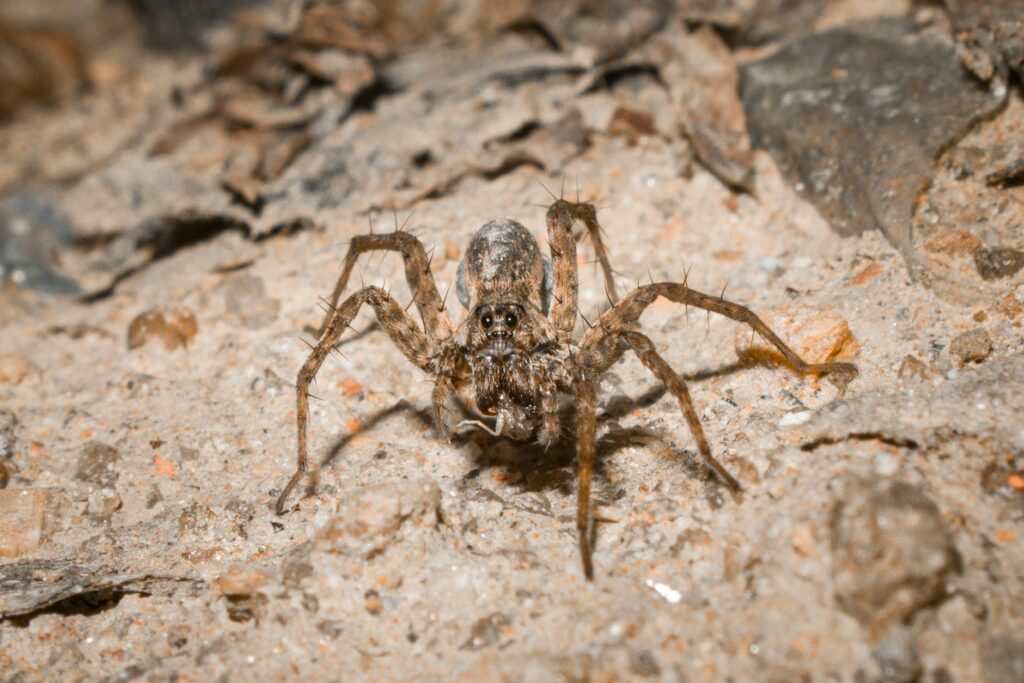
The wolf spider species homeowners encounter most often is tan with dark brown longitudinal stripes on the back. Those stripes run the length of the body and are usually visible without magnification. Brown recluse spiders lack that striped pattern. It has a uniform brown color and a darker violin-shaped marking on the head region.
Wolf spiders are ground-inhabiting hunters that do not build webs, and their bodies tend to look bulkier than a brown recluse. Brown recluses have a uniform brown color and a distinct violin-shaped marking on the head region, which is the most reliable visual difference between the two. Among commonly encountered species, the brown recluse is one of the few considered seriously venomous to humans.
How to Spot Spider Activity Inside Your Home
Wolf spiders are active hunters. You may see one moving across a floor, especially at night. They do not build webs to catch prey, so you will not find a wolf spider sitting in a web in the corner of a room.
Brown recluse spiders typically live in dark, undisturbed areas such as closets, garages, attics, storage rooms, and behind furniture. You are more likely to find evidence of brown recluses on glue monitors or during cleaning than by spotting one in the open.
Where These Spiders Show Up Around Homes
Wolf spiders often appear at ground level, along baseboards, in garages, and near exterior doors. They follow insect prey and may wander inside when conditions shift outdoors.
Brown recluses favor areas that stay still for long stretches. Boxes in storage rooms, seldom-moved furniture, and cluttered garage shelves are typical spots. Areas with other bug activity can support a brown recluse population over time.
Exterior Entry Points These Spiders Use
Both species can enter through gaps around door sweeps, cracks in the foundation, and openings around utility penetrations. Inspecting these entry points is an important part of limiting spider access and movement throughout your home.
Why Wolf Spider and Brown Recluse Problems Develop
Wolf spiders and brown recluses share a knack for turning up in places you would rather they did not. Understanding why each spider shows up in your home starts with knowing where they prefer to live, what draws them indoors, and how they travel through a structure. The two spiders differ in behavior, but the conditions that invite them often overlap.
Outdoor Nesting Areas for Wolf Spiders and Brown Recluses
Wolf spiders are ground-level hunters that shelter under rocks, landscaping timbers, and leaf litter. Brown recluses also favor undisturbed spots, but they tend toward enclosed, dark areas rather than open ground. Keeping debris from piling up around your home removes habitat that can support both species.
Food and Shelter That Attract These Spiders
Brown recluses are insect feeders, so a home with an existing insect population provides a steady food source. Controlling the broader insect population is a key part of long-term brown recluse management. Wolf spiders hunt insects on the ground and follow prey indoors when conditions are favorable. Both spiders seek dark, undisturbed storage areas for shelter.
How These Spiders Move Around Homes
Brown recluse spiders hide during the day and come out at night to roam in search of food. As daylight approaches, they look for dark areas and may find their way into shoes, toys, or piles of clothing on the floor. Wolf spiders are active hunters that cross floors and walls in the open rather than tucking into stored items.
Trails and Entry Points These Spiders Use
Gaps around door sweeps, cracks in foundations, and openings around utility penetrations give both spiders a way inside. Because brown recluses prefer to stay hidden once indoors, they can build up in a structure for some time before you notice them. Wolf spiders are more likely to be spotted crossing open areas.
Risks From Wolf Spiders and Brown Recluses
The risk gap between these two spiders is the main reason the wolf spider vs brown recluse comparison matters for homeowners. Wolf spiders may look intimidating, but they are not considered medically important. Brown recluse spiders carry a small but real chance of tissue damage from a bite, which makes correct identification worth your time.
Health Risks Linked to These Spiders
About 10% of brown recluse bites cause moderate or greater tissue damage and scarring, while the vast majority only result in inflammation and heal well without medical intervention.
Because most brown recluse bites involve only inflammation, recommended first aid includes washing the bite with soap and water, applying a cold compress to reduce swelling, and elevating the affected area if possible. Seek medical attention if symptoms worsen. Some medical experts suggest using cold water rather than ice to avoid freezing tissue, and a neutral flat position rather than elevation.
Wolf spider bites, by comparison, do not carry the same tissue damage concern. Knowing which spider you are dealing with helps you choose the right response.
Property Damage From Wolf Spiders and Brown Recluses
Neither wolf spiders nor brown recluse spiders cause structural or property damage. They do not chew wood, fabric, or wiring. Their presence is a nuisance issue rather than a building-integrity concern. The real risk from a brown recluse population stays on the health side.
Spider Activity Near Food Storage Areas
Kitchens, pantries, and other areas that attract insects can feed brown recluse activity. Wolf spiders also feed on insects, but tend to roam rather than settle into hidden spots. Reducing overall insect activity in your home makes the space less appealing to either species.
When to Take a Closer Look at Spider Activity
Brown recluses usually only bite when disturbed by accident. If you are finding spiders in dark, seldom-used spaces, it is worth confirming which species you have.
Glue monitors can help track spider activity and identify problem areas. Checking door sweeps, gaps, and cracks also gives you a clearer picture of how spiders are entering. A closer look now helps you understand whether you are dealing with a wolf spider that poses no documented medical risk or a brown recluse that may warrant a more targeted approach.
Professional Pest Control for Wolf Spiders and Brown Recluses
When comparing wolf spider vs brown recluse, the distinction matters most for how you manage each pest. Wolf spiders are free-roaming hunters that typically wander indoors by accident. Brown recluses settle into dark, undisturbed spaces and can be difficult to manage once established.
How to Reduce Attractants for These Spiders
Excluding insects from your home will also help reduce spider populations. Controlling other insects removes the food source that sustains brown recluses and can cause their numbers to decline over time.
At Brandley Pest Control, our Pest Maintenance Plan covers interior and exterior crack and crevice treatment, which helps limit the insects that draw spiders inside. Reducing clutter in storage areas also removes the hiding spots brown recluses prefer.
Why Spider Control Starts With an Inspection
Proper identification is the first step. Brown recluse spiders have a distinct fiddle-shaped marking on the front portion of their backs and three pairs of eyes arranged in a semi-circle. Wolf spiders lack these features. Confirming which spider is present guides the entire approach.
Our service includes placing glue monitors to track spider activity and identify problem areas. We also inspect door sweeps, gaps, cracks, and other entry points to understand how spiders access your home.
What to Expect During Professional Treatment
Brown recluse spiders are difficult to kill with most insecticides. That is why a single application rarely solves a brown recluse problem. Our approach focuses on overall insect control first, targeting the prey that sustains the spiders. We also use outside perimeter treatment and address entry points to limit spider access.
Brown recluse infestations typically require a combination approach. As part of our standard service, we brush down webs and egg sacs, which disrupts habitat for web-building spiders and removes food sources.
What to Expect From a Spider Control Plan
According to Texas A&M AgriLife Extension, the best solution to a household infestation of brown recluse spiders is to hire a professional pest control company. Brandley Pest Control uses a whole-home, strategic approach that combines insect control, monitoring with glue boards, and entry point improvements to manage brown recluse activity over time.
Female brown recluses tend to stay closer to their retreats while males roam farther in search of prey. When insect populations inside the home drop, the food source that sustains the spider population shrinks, and their numbers can decline over time. This layered strategy addresses the root of the problem rather than relying on a single visit.
Wolf spiders, by contrast, are typically incidental invaders. Sealing gaps and maintaining perimeter treatments as part of your Pest Maintenance Plan can help keep them from wandering indoors. If you suspect you have been bitten by a brown recluse, seek immediate medical attention, because early treatment can lessen the effects of a bite.
Wolf Spider vs. Brown Recluse: Bottom Line
Telling a wolf spider apart from a brown recluse matters because the two spiders call for different responses. Wolf spiders are large, fast, and often spotted out in the open, while brown recluses stay hidden in quiet, seldom-disturbed spaces. If you suspect brown recluse activity in your home, a professional approach that combines insect control, glue monitors, and entry-point improvements is the most reliable path forward, based on reducing the food source that sustains the spiders.
Brandley Pest Control serves the Oklahoma City metro, including Edmond homes. If you keep seeing spiders at home, you can contact our team to schedule an inspection whenever you are ready.
Frequently Asked Questions
How can I tell the two apart at a glance?
Wolf spiders are stocky, hairy, and tend to run across floors or walls in plain sight. Brown recluses are smaller and smoother, with six eyes arranged in three distinct pairs rather than the eight eyes most spiders have. Look for that eye pattern and the violin-shaped marking on the brown recluse’s back to help distinguish them.
Are brown recluses aggressive toward people?
Brown recluses are not aggressive. They typically bite only when accidentally disturbed, such as when someone reaches into a storage box or puts on clothing that has been sitting undisturbed. Keeping clutter to a minimum in closets and garages reduces the chance of an accidental encounter.
Why is insect control part of brown recluse management?
Brown recluses feed on other insects. Reducing the overall insect population inside a home removes their food source. Female brown recluses rely on males to bring back food, so when the overall insect population drops, the food supply shrinks and the spider population declines.
Do I need ongoing service or just a one-time treatment?
Brown recluse infestations are difficult to resolve with a single treatment. A whole-home strategy that includes targeted insect control, monitoring with glue boards, and sealing gaps and cracks works best over time. Brandley Pest Control’s Pest Maintenance Plan provides recurring interior and exterior crack-and-crevice treatment to help keep spider activity in check.